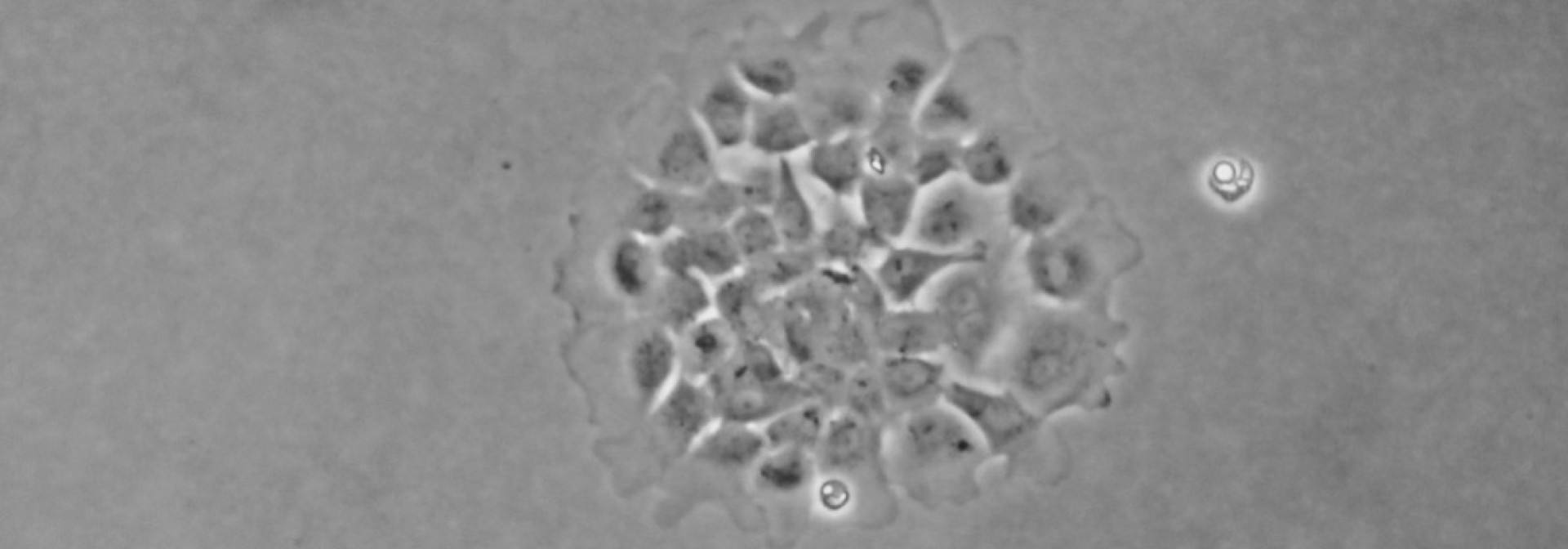
By means of a multidisciplinary range of scientific and technical expertise that covers fish cell lines, live fish, microinjection techniques for fish embryos as well as molecular and cell biology, the FISHCELL project generated a set of novel achievements and molecular and cellular tools relevant for our field of research, namely:
- Embryonic stem (ES) cell line (ESSA1) from blastula stage embryos of Sparus aurata. These cells can be triggered to differentiate towards mesenchymal cell lineages and were able to produce chimeras for the first time. The described features make it an attractive and valuable tool for stem cell research.
- The first skeletal derived cell lines (ZFB1 and ZFB2) from Danio rerio, which can differentiate into two different bone lineages, i.e. chondroblast and osteoblast, with the capability of extracellular matrix mineralization.
- A new protocol to culture blastema cells from regenerating caudal fin of teleost fishes which can be used to study bone regeneration.
- A new cell line (BSa2) from the blastema of S. aurata with the ability of multilineage differentiation and capable of in vitro mineralization. The availability of such in vitro cell systems will stimulate the research on the mechanisms of blastema cell differentiation during fin regeneration and provide new insights into the mechanisms of bone formation.
- A new cell line (ZFB3) derived from the vertebra of a transgenic zebrafish line named EF1α:Kaede which, through the use of Cre/loxp system coupled with Osx-Cre, allowed the development of a cell line useful for fish cell lineage tracing studies.
- Preliminary data indicate that ZFB2 cells were successfully reprogrammed into a pluripotent ES-cell-like state, a result not previously described for fish cells.
SCIENTIFIC HIGHLIGHTS
- We have been able to obtain the ES cells from Danio rerio but not to have them survive after the first few passages in culture. However, we have shown that the primary ES cell culture shares all of the in vitro properties of rodent and human ES cells.
- We have established an embryonic stem-like (ES) cell line, ESSA1 from the blastula stage embryos of S. aurata. These cells can be triggered to differentiate towards mesenchymal cell lineages and were able to produce chimeras in zebrafish. The described features make these cells an attractive and valuable tool for stem cell research.
- We have developed a new protocol to culture blastema cells from regenerating caudal fin of teleost fishes. Using this primary blastema cells as an in vitro tool, we have studied zebrafish bone regeneration after exposure with Pro and anti-osteogenic drugs.
- We were successful in deriving a new cell line, BSa2 from the blastema of S. aurata with the ability of multilineage differentiation and capable of in vitro mineralization. The availability of such in vitro cell systems will stimulate the research on the mechanisms of blastema cell differentiation during fin regeneration and provide new insights into the mechanisms of bone formation.
- We established a bone derived cell line, ZFB1 from Danio rerio, which can be differentiated into two different bone lineages, i.e. chondroblast and osteoblast, and has been shown to be suitable to study bone cell differentiation and extracellular matrix mineralization.
- In vitro reprogramming of zebrafish bone derived cells ZFB2 into pluripotent ES-cell-like state for the first time, we have contributed to emphasize the importance and potential of fish iPS cells for stem cell research.