Course Content
Participants will gain hands-on experience with a modelling software (STELLA by Isee Systems) during the practical sessions. They will be encouraged to create conceptual diagrams of models tailored to their research interests. Additionally, they will learn how to mathematically translate the interconnections between model components and conduct initial simulations.
The course will cover model calibration and sensitivity analysis, providing practical methods for applying these techniques. Instructors will offer valuable feedback and constructive guidance to support the development and future implementation of participants' models.
Course Description
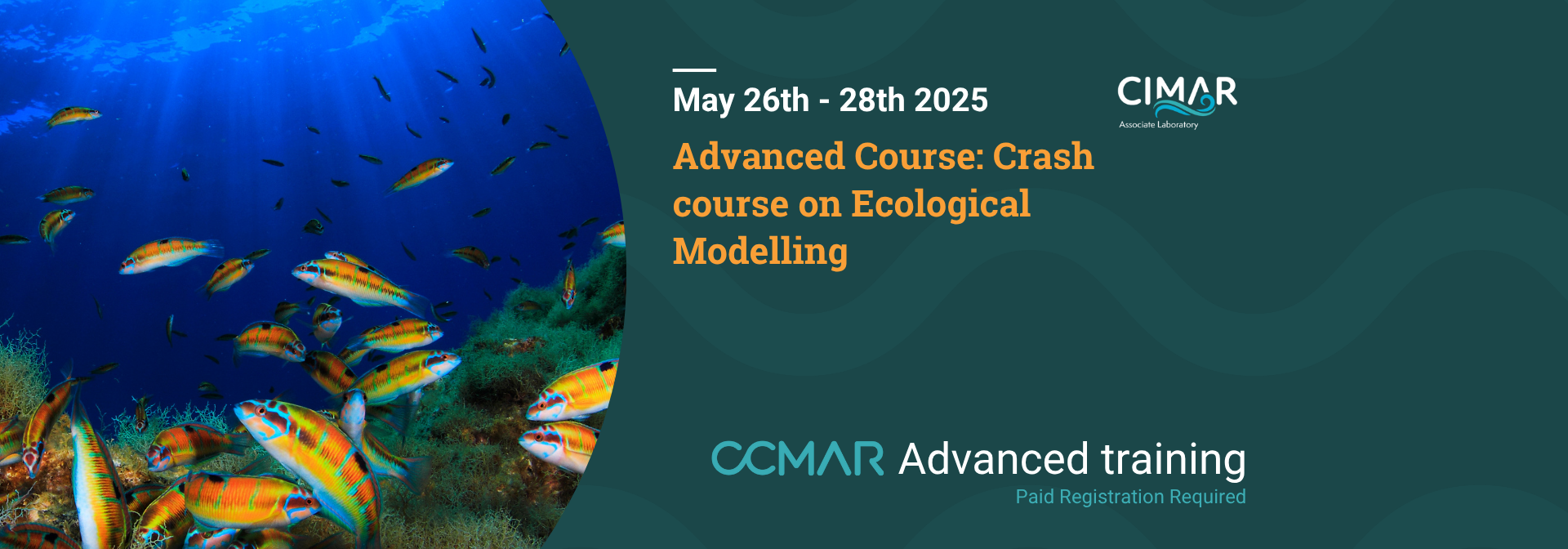
Ecological models are useful tools to understand natural systems and predict their variations over time as they describe processes that govern organisms and ecosystems functioning, while accounting for simultaneous effects of multiple stressors.
This immersive 3-day crash course is designed to equip attendees with the essential knowledge and skills for building dynamic models of marine organisms and ecosystems. Through a blend of engaging theoretical and hands-on sessions, attendees will gain valuable insights into selecting key model components, identifying critical external variables, and understanding the complex interrelationships that drive ecosystem dynamics.
Whether participants are new to the field or looking to sharpen their expertise, this course will provide the practical tools and foundational concepts needed to advance in marine modelling.
Pre-Requisites
Personal computer: A basic understanding of biological -ecological science; OS Windows 7 or higher, 64 bits; r-studio.
Course Pricing
📌 Students: 180€
📌 Researchers/Academics: 200€
📌 Others: 250€
NOTE: Members of CIMAR-LA (CCMAR and CIIMAR) have the same access conditions.
If you wish to pay through CCMAR internal funds (option only available to CCMAR members), you should not make the monetary payment. In this case, you should contact the researcher responsible for these funds, requesting authorisation by email, with Cc: to expedienteccmar@ualg.pt, requesting your registration to be paid by internal transfer, indicating the name of the event, the cost centre to support and the amount. Only cost centres classified as “receitas próprias” and, possibly, the Plurianual internal allocation (requires prior authorisation from the researcher responsible for the event) are available for this payment method.
Course Organization
Instructor description
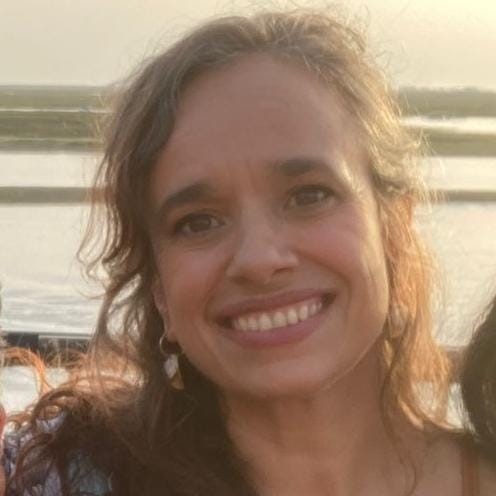
Irene Martins (PhD in Ecology) is the Principal Investigator of the Marine Ecosystem team (MEMO) of CIIMAR, University of Porto (https://www.ciimar.up.pt/teams/marine-ecosystem-modelling/). Her research focuses the development of ecological models of organisms, populations and marine ecosystems, aiming at understanding their dynamics and predict their variations over time and space, induced by several stressors (e.g., climate change, contaminants, deep-sea mining). She has been developing various types of models, ranging from bioenergetics and population dynamics to food-web and end-to-end models. She is interested in multidisciplinary approaches to marine ecosystems, combining diverse numerical tools and IT solutions—such as ecological, hydrodynamic, and socio-economic models, GIS, and data bases—to create innovative frameworks that support the sustainable development and conservation of coastal and marine environments. She has extensive experience in both lecturing and organizing courses and workshops focused on ecological modelling and other numerical tools, having successfully led numerous events in these areas (https://www.ciimar.up.pt/members/irene-martins/).
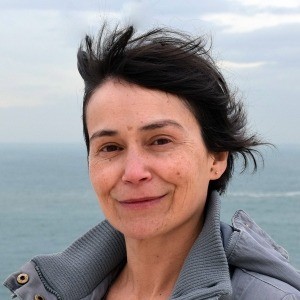
Gabriela Faria Oliveira holds a degree in Oceanography, an MSc in Biological Oceanography (University of São Paulo, Brazil), and a PhD in Marine Science, Technology, and Management (University of Aveiro, Portugal), focusing on the sustainable use of marine resources. In recent years her work has focused on ecological analyses and ecosystem modelling. During the PhD, she studied Mediterranean mussel population dynamics along the Portuguese coast using R and Generalized Additive Models (GAM) to analyze demographic and oceanographic data. As a research assistant in European projects, she modelled nutrient and energy flows, developing a dynamic model, using Stella Architect, to estimate growth and production in Integrated Multitrophic Aquaculture (IMTA) systems. She also has knowledge in Life Cycle Assessment (LCA), Emergy analysis and Ecosystem Services approaches. Currently, she is working on the DTO-Bioflow Project (Integration of Biodiversity Monitoring Data into the Digital Twin Ocean), modelling macroalgae aquaculture production in southern Portugal (https://www.ciimar.up.pt/pt-pt/members/gabriela-faria-oliveira/).
List of articles
I Martins, A Guerra, CG Vale, C Xavier, I Martins, M Pinheiro, T Neuparth, ...2024. Developing a dynamic energy budget model to project potential effects of deep-sea mining plumes on the Atlantic deep-sea mussel, Bathymodiolus azoricus. Ecological Informatics 83, 102803
A Azevedo, A Guerra, I Martins. 2024. Seamounts ecological modelling: A comprehensive review and assessment of modelling suitability to emergent challenges. Ocean & Coastal Management 251, 107050
G.F. Oliveira, J. Pimentel-Santos, I. Gomes, R. Albuquerque, H. Queiroga, L.G. Peteiro. 2024. Seasonal and synoptic spatio-temporal variability on larval delivery mechanisms inferred from mussel settlement patterns in the Portuguese coast. Estuarine, Coastal and Shelf Science. 305, 108875



Eventos relacionados