Articles in Scientific Journals:
Carlier JD, Luís AT, Alexandre LM, Costa MC (2020b) Feasibility of Co-treating Olive Mill Wastewater and Acid Mine Drainage. Mine Water and the Environment. 39: 859-880. https://doi.org/10.1007/s10230-020-00719-1
Carlier JD, Alexandre LM, Luís AT, Costa MC (2019a) Potential of industrial by-products and wastes from the Iberian Peninsula as carbon sources for sulphate-reducing bacteria. International Journal of Environmental Science and Technology. 16: 4719-4738. https://doi.org/10.1007/s13762-018-02197-z
Ballester A, Castro L, Costa MC, Carlier J, García-Roig M, Pérez-Galende P, Alvarez A, Bertagnolli C, Guibal E (2017) Design of remediation pilot plants for the treatment of industrial metal-bearing effluents (BIOMETAL DEMO project): Lab tests. Hydrometallurgy. 168: 103-115. https://doi.org/10.1016/j.hydromet.2016.10.010
Oral Communications
Carlier JD, Luís AT, Alexandre LM, Costa MC (2020c) Feasibility of Co-treating Olive Mill Wastewater and Acid Mine Drainage. 2020 CCMAR Symposium, Centre of Marine Sciences of the Algarve (CCMAR). December 18. Online Zoom.
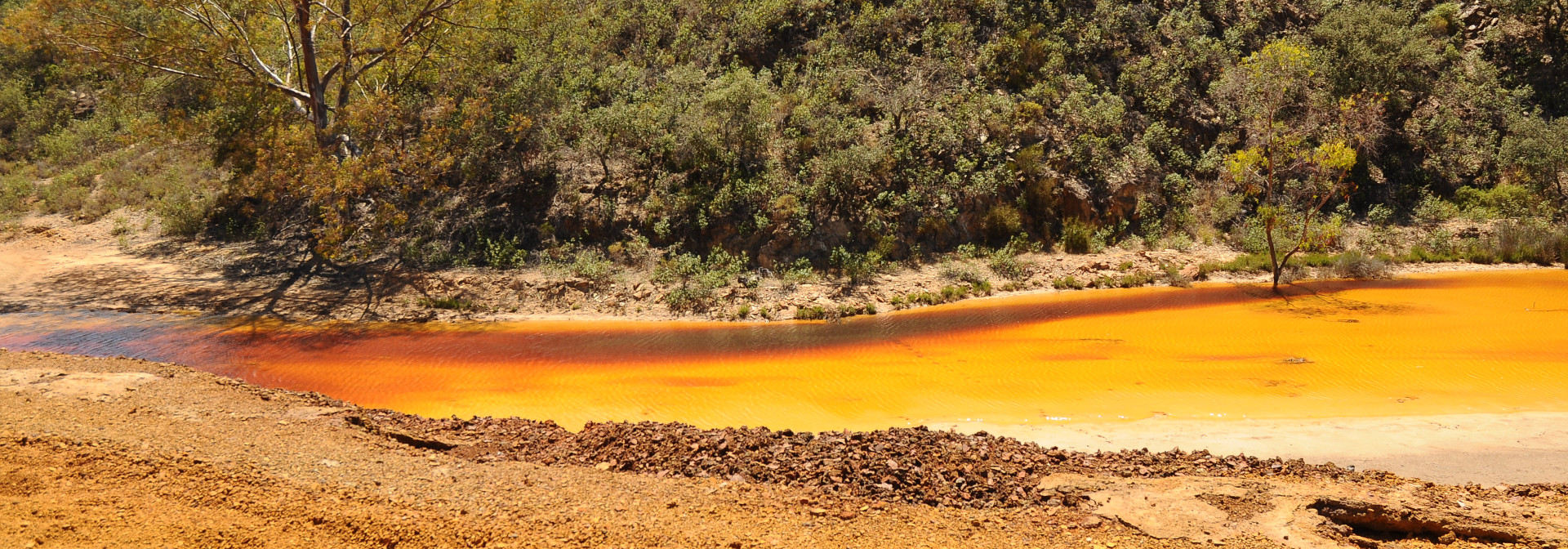
Carlier JD, Ferreira H, Costa MC (2017a) Pilot plant at São Domingos mine for the biological treatment of acid mine drainage. 4th Interdisciplinary Day at the São Domingos Mine: Mines, technologies and education: convergences (4ª Jornada Interdisciplinar da Mina de São Domingos: Minas, tecnologias e educação: convergências). 24th November, São Domingos mine, Portugal.
Alexandre LM, Carlier JD, Luís AT, Costa MC (2016) Screening of industrial sub-products as alternative carbon sources to sustain the growth and activity of sulphate-reducing bacteria – Part II. 11th conference on Sustainable Development of Energy, Water and Environment Systems – SDEWES. 4-9 September. Lisbon, Portugal.
Anucha CB, Alexandre LM, Carlier JD, Luís AT, Costa MC (2016) Batch tests to access the efficiency of beetroot and orange molasses as sources of nutrients to sustain bioremediation processes for acid mine drainage. 3rd International Congress on Water, Waste and Energy Management (EWWM). 18-20 July. Rome, Italy.
Carlier JD, Costa MC (2015b) Projetos de investigação envolvendo o tratamento de águas ácidas da mina de São Domingos (Research projects involving acidic water treatment at the São Domingos mine). II Jornadas Interdisciplinares Mina de São Domingos: Minas, Tecnologias e Educação: Convergências. 4th December 2015. Mina de São Domingos, Portugal.
Carlier JD, Luís AT, Costa MC (2015a) Screening of industrial sub-products as alternative carbon sources to sustain the growth and activity of sulphate-reducing bacteria. 10th conference on Sustainable Development of Energy, Water and Environment Systems – SDEWES. 27 September – 2 October. Dubrovnik, Croatia.
Carlier JD, Barros RJ, Costa MC (2014) Testing Sulphate Reducing Bacteria for the bioremediation of metal-contaminated wastewaters with relatively low sulphate concentrations. International Congress on Green Chemistry and Sustainable Engineering. 29 – 31 July. Barcelona, Spain.
Pedagogical material published on massive dissemination platforms
A short movie was produced by Amir Nobahar, Jorge Dias Carlier and Maria Clara Costa, about work at a pilot plant designed, constructed and tested in the scope of projects BIOMETALDEMO and METALCHEMBIO was published in YOUTUBE: English version (https://www.youtube.com/watch?v=JTcw6MkuWL4).