
Structural and chemical analysis
Structural and chemical analysis
A technological platform to identify, quantify and unveil the structure of chemicals in biological material
At CCMAR we have put together a high-performance platform to identify and discover all types of compounds in natural products, enabling us to also quantify those compounds and even to describe their molecular structure. In this platform you will find state-of-the-art equipment (mass spectrometers, NMR, etc.) and the support of a technical team that gathers expertise in methodology development, sample preparation and analysis.
Through this technological platform, CCMAR is a member of:

What this platform offers?
The capabilities of this platform span from conducting basic analyses of compound content and concentration, elucidating the primary classes of chemicals within a sample, to more advanced tasks such as screening and isolating specific fractions or individual compounds. In the latter scenario, the platform excels in defining the precise chemical structure of the isolated compound.
Chemical identification
Among the array of compounds already extracted from marine organisms, ranging from plants to animals, are partially purified chemical fractions exhibiting noteworthy properties such as anti-tumoral, anti-parasitic, and pheromonal activities. The identification of the chemical structure of bioactive compounds facilitates their synthesis, either internally or through collaboration with commercial entities. This enables in-depth investigations into their structure-function relationships.
Synergy with other platforms
By leveraging synergies with other technical platforms at CCMAR, we can further explore the bioactivity of chemical fractions or isolated compounds. This entails conducting bioassays employing whole animals or in vitro assays utilizing cell lines, enzymes, and biosensors, thereby expanding the scope of our research.

Services available through this platform
These services are available for on site or remote access depending on their characteristics and client preferences.
Chromatography and Mass Spectrometry
This service carries out ultra-high-performance liquid chromatography (UHPLC), preparative chromatography (LC-Prep), high-performance liquid chromatography (HPLC), gas chromatography (GC), and mass spectrometry (UHPLC-MS; GC-MS).
What is Mass Spectrometry?
Mass spectrometry is a physical analytical technique used to detect and identify molecules of interest by measuring their mass and characterising their chemical structure.
Our services include:
Routine chromatographic analysis for separation, identification and quantification as development, implementation and validation of polar and nonpolar compound.
Ultra Performance Liquid Chromatography (UHPLC) coupled to High Resolution Mass Spectrometry (HRMSn) - Thermo Scientific Ultimate 3000 - Orbitrap Elite
It is a primary tool for compound identification. Provides information on the structure of the main organic and inorganic compounds in each sample, with minimum sample preparation.
The system is a Thermo Scientific instrument, model Nicolet™ iN™10, equipped with DTGS, MCT-A/MCT-B single element and MCT-A Array detectors. Sampling can be performed by ATR, reflection and transmission.
Access: Remote
Technical details
High-Performance Liquid Chromatograph (HPLC) - (Knauer Smartline + Varian 380 + 2600 UV)
Equipped with fraction collector and UV (Knauer 2600) and evaporative light scattering (ELSD - Varian LC-380) detectors.
This instrument operates in a wavelength range of 190 to 400 nm.
This equipment allows separation, purification, identification, and quantification of organic compounds (liquid samples).
Access: Remote and onsite
Technical details
Gas Chromatographer’s Triple Quadrupole - (Bruker TQ-456GC)
This system can operate in GCMS or GC-FID mode, with PTV and S/SL injectors.
GCMS is an analytical technique that combines the features of gas chromatography and mass spectrometry to identify different substances within a sample.
It allows the identification of organic compounds using NIST libraries and quantification of target compounds by Full scan, SIM and MRM (MS/MS and MSn reduce matrix influences and provide more detailed structural information). Identifies and quantifies volatile organic compounds. This sensitive and simple to operate equipment is used for compound discovery and metabolomics (small molecules/metabolites).
GC-FID is used for separating and analysing compounds that can be vaporized without decomposition. The GC- FID can detect almost all carbon containing compounds.
Access: Remote
Technical details
Preparative Chromatography (LC-Prep) - Shimadzu Nexera Prep
The system is equipped with a Light Scattering Detector (ELSD LT II), a UV-Vis Detector (SPD-40), an autosampler and a fraction collector. Four solvents can be used in the mobile phase at pressures up to 400 atm.
The system can be operated under analytical or preparative conditions and therefore the scale up to preparative analysis is straightforward. A Method Scouting Software is available to fast achieve the optimum separation conditions.
Access: Remote
Technical details
Nuclear Magnetic Resonance
The NMR at CCMAR is dedicated to the analysis of compounds of diverse origins, including extracts from marine samples.
We provide support, training and services in NMR, particularly in instrument use and spectral interpretation.
What is nuclear magnetic resonance spectroscopy?
Nuclear Magnetic Resonance (NMR) spectroscopy, often called NMR, is a research method that uses the magnetic properties of atomic nuclei to understand the characteristics of atoms or molecules. This research technique involves recording the interaction of radiofrequency electromagnetic radiations with the nuclei of molecules in a strong magnetic field.
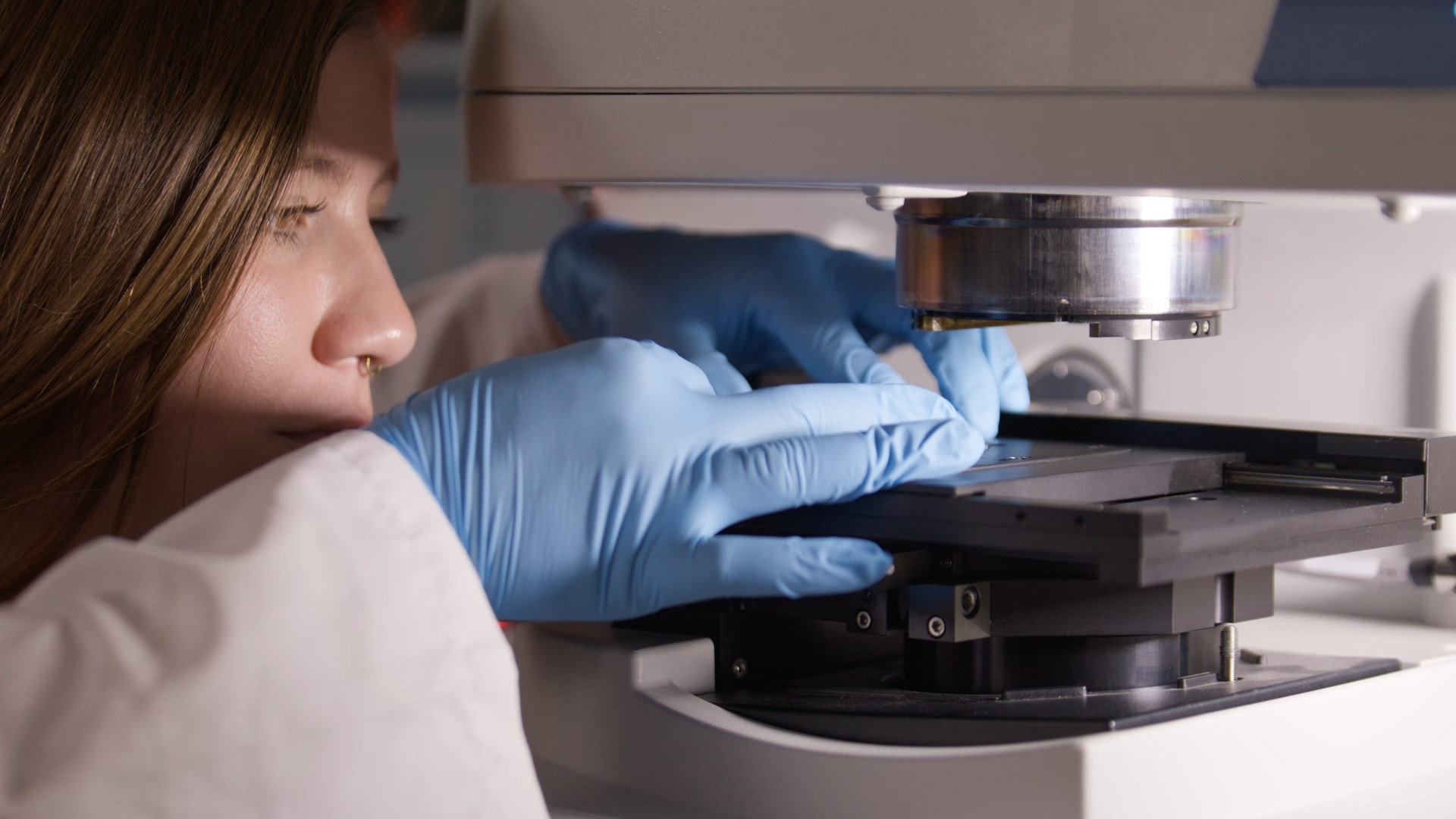
Nuclear Magnetic Resonance 500Mhz - NMR (JOEL JNM-ECZ500R/S)
This powerful analytical equipment provides information on the molecular structure of the compounds (structural analysis), and on the interaction between molecules.
The equipment includes an HFX probe and autosampler and can be used for molecular structure discovery and supramolecular chemistry.
It can perform 1-D (1H-NMR, 13C-NMR and 19F-NMR) and 2-D (1H -1H COSY, 1H -13C HSQC and 1H -13C HMBC) NMR analyses. Other 2-D studies, such as NOESY and DOSY and low temperature experiments can also be made.
Fluorinated compounds are readily studied by using the Royal HFX triple resonance probe. The NMR is a 500 MHz JEOL instrument, model JNM-ECZ500R/S3.
The system is equipped with a Royal HFX probe (5 mm, triple resonance), a 3 mm probe and an autosampler.
Access: Onsite (requires trainning) and Remote
Technical details
Spectrophotometry
Spectrophotometry is a method to measure how much a chemical substance absorbs light by measuring the intensity of light as a beam of light passes through a sample solution. It is one of the most useful methods of quantitative analysis in various fields such as chemistry, physics, biochemistry, material and chemical engineering and clinical applications.
Infrared Microscopy (µ-FTIR) - Thermo Scientific Nicolet iN10MX
The system is a Thermo Scientific instrument, model Nicolet™ iN™10, equipped with DTGS, MCT-A/MCT-B single element and MCT-A Array detectors. Sampling can be performed by ATR, reflection and transmission.
It is a primary tool for compound identification. Provides information on the structure of the main organic and inorganic compounds in each sample, with minimum sample preparation.
Access: Onsite (with training) and Remote
Technical details
Multi-Mode Microplate Reader - (Biotek Synergy Neo 2)
System with a monochromator for variable bandwidth, absorbance, fluorescence and luminescence filters for fluorescence polarization, time-resolved fluorescence. The equipment allow wavelength selection from 230 to 999 nm in 1-nm increments. Endpoint, area, spectral scanning, and pathlength correction are available.
Two types of fluorescence detection system: filter and monochromator-based. The fluorescence monochromator system provides wavelength selection in 1-nm increments in the range of 250-900 nm (excitation) and 250-900 nm (emission). The luminescence system provides wavelength selection in 1-nm increments in the range of 300 to 700 nm.
Access: Onsite and Remote
Technical Details
Multi-Mode Microplate Reader - (Biotek Synergy 4)
The absorbance monochromator provides wavelength selection from 200 to 999 nm in 1-nm increments.
Area and spectral scanning, and pathlength correction read methods are available .
The fluorescence monochromator system provides wavelength selection in 1-nm increments in the range of 250-750 nm (excitation) and 300-800 nm (emission).
The luminescence system provides wavelength selection in 1-nm increments in the range of 300 to 700 nm.
The Synergy supports the reading of 1-, 6-, 12-, 24-, 48-, 96-, 384-, and 1536-weel microplates, and 96-well half-area plates with 128x86 mm geometry.
Access: Onsite and Remote
Technical details
UV-VIS Spectrophotometer (Agilent Cary 4000)
The Cary 4000 is a high-end UV-Vis spectrophotometer with photometric performance in the 175–900 nm range.
The system is ideal for analyzing liquid and solid samples or biotechnology samples with minimal sample preparation.
The equipment has a versatile suite of accessories including temperature control, liquid, and solid sample holders, multicell holders, and diffuse and specular reflectance accessories.
Access: Remote and onsite
Technical details
UV-VIS Spectrophotometer (Hitachi Model: U2000)
Hitachi Model: U2000
UV-Vis spectrophotometer with wavelength range 190 to 1100nm, spectral bandpass 2nm, and double beam photometric system. This system is ideal for analysing single liquid samples with cuvette vials.
Access: Remote and onsite
Technical details
Elementar Analysis
Elemental Analyser (Vario EL III)
Enables the determination of carbon, hydrogen, and nitrogen contents in solid samples.
The total analysis time is less than 12 minutes for CHN simultaneous.
Access: Remote
Technical details
Microwave Plasma Atomic Emission Spectroscopy - (Agilent - 4200)
Analyses the mineral composition (elements) of a sample.
Enables the quantification of metals in different type of materials, after digestion / solubilization in specific organic solvents.
Access: Remote
Technical details
Sample Processing
Automated Microwave Digestion System (CEM Discover SP-D 80)
The system can be used for digestion of water, soil, sediment, food, plants, beverages, wastewater or waste products, and others.
This is a system fully automated with autosampler 24 vials/vessel. Since each vial/vessel has its own method, you can mix and match samples and acids within the autosampler. Digestion time can be 10 minutes, depending on the digestion method.
Allows to obtain a clear aqueous sample necessary to other chemical analysis as determination of elements by MP-AES, AA or ICP, ICP-MS, others.
Access: Onsite and Remote
Technical details
Microbalance (Sartorius: MSA36S-000-DH)
A microbalance is an instrument capable of making precise measurements of weight of samples of relatively small mass. Limited in precision to 0,001 milligrams.
Access: Onsite and Remote
Technical details
Balance (Sartorius: QUINTIX224-1S)
A microbalance is an instrument capable of making precise measurements of weight of samples. Limited in precision to 0,1 mg.
Access: Onsite and Remote
Technical details
Specific analysis
Our services also encompass specialized analyses tailored for the precise determination of elements or heavy metals, microplastics, biotoxins, and essential oils.
It's worth noting that, in line with the ethos of innovation and research permeating CCMAR, if a particular analysis is not currently available, we possess the capability and flexibility to develop it according to specific requirements and demands.
Our Prices
| TYPE OF ANALYSIS | Cost per sample for Non-profit External User (€, excluding IVA/ VAT) | Cost per sample for-profit/ Business (€, excluding IVA/ VAT) |
|---|---|---|
| Analysis using HRMSn, NMR, m-FTIR | ||
| ESI-HRMSn spectrum | 5 | 10 |
| Sample prep & 1H/13C spectrum NMR (2-5 mg 1H; 20-30 mg 13C) | 22 | 24 |
| Microplastics in water/salt, m-FTIR (Silicon filters 5 mm) | 86 | 102 |
| Materials m-FTIR ATR | 14 | 20 |
| Analysis for the quantification of marine biotoxins in bivalves using LC-MS | ||
| Ac. ocadáico e dinofisistoxinas | n/a | 120 |
| Toxinas azaspirácidos(DSP) | n/a | 80 |
| Toxinas iessotoxinas (DSP) | n/a | 80 |
| Pectonotoxins | n/a | 80 |
| Paralysing toxins (PSP) | n/a | 200 |
| Amnesic shellfish toxin (ASP) | n/a | 70 |
| All (29) | n/a | 500 |
| Analysis for archaeological samples using Elementar Vario EL III | ||
| Determination of total percentage of carbon, organic carbon, nitrogen and hidrogen in archaeological samples | n/a | 50 |
| Analysis for archaeological samples using Elementar Vario EL III | ||
| Determination of essential oils in plant oils | 14,5 | 15,5 |
| Determination of fatty acids in fish oils | 25 | 26 |
| Determination of phenolic compounds in plant extracts | 28 | 29 |
| Determination of contaminants profiles in plants | n/a | 57 |
| Element determination using Agilent 4200 |
for each |
for each element |
| Determination of elements (Ca, Na, Fe…) in water | 16,5 | 21 |
| Determination of heavy metals (Al, As, Cd, Cr, Co, Cu, Hg, Ni, Pb, Zn) in water | 16,5 | 21 |
| Determination of elements (Ca, Na, Fe…) in oysters | 17,5 | 21 |
| Determination of heavy metals (Al, As, Cd, Cr, Co, Cu, Hg, Ni, Pb, Zn) in oysters | 17,5 | 21 |
| EQUIPMENT | Cost per hour for Non-profit External User (€, excluding IVA/ VAT) | Cost per hour for profit /Business (€, excluding IVA/ VAT) | Independent users allowed (yes/no) |
|---|---|---|---|
|
Ultra-performance Liquid Chromatography (UHPLC) Manufacter: Thermo Scientific Model: Ultimate 3000 The U-HPLC separates compounds. The high pressure capability of the U-HPLC allows the use of thin columns and high surface stationary phases, which can separate many compounds in short time. The U-HPLC is equipped with a quaternary pump, a solvent degasser, an autosampler, a column compartment with temperature control and a Diode Array Detector (DAD). This detector can be used to obtain the UV-Vis absorption spectra of separated compounds and to quantify molecules showing absorbance in the UV-Vis spectral region. Capable of: MSn, n up to 10. NOTE: Priority to LC-MS. |
24 | 27 | no |
|
LC-MS: Ultra-performance Liquid Chromatography coupled to High Resolution Mass Spectrometry (UHPLC-HRMS) Manufacter: Thermo Scientific (U-HPLC) + Orbitrap (HRMS) Model: Ultimate 3000 (U-HPLC) + Elite (HRMS) The system can be used in any research area requiring identification and/or quantification of organic or inorganic compounds. The mass spectrometer (MS) is able to detect the m/z ratio of charged molecules or molecular systems. The high resolution and high accuracy usually gives the molecular formula of detected ions. The system is also capable of performing sequential (multistage) Mass Spectrometry, MSn. The combination of the exact masses, isotope distributions and fragmentations patterns allows for identification of many compounds. Cost per hour for Non-profit External User (€, excluding IVA/ VAT) 24 Cost per hour for profit /Business (€, excluding IVA/ VAT) Independent users allowed (yes/no) 27 EletroSpay Ionization (ESI), for polar compounds, Atmospheric Pressure Chemical ionization (APCI), for less polar compounds, are available. The system can also be used to quantify molecules by following the intensity of m/z signals or of any fragments(s) produced by MSn with very high selectivity and sensitivity. Samples can be introduced directly into the MS (infusion) or via U-HPLC. The U-HPLC separates the compounds before they arrive into the MS. The high pressure capability of the U-HPLC allows the use of thin columns and high surface stationary phases, which can separate many compounds in short time. The U-HPLC is equipped with a quaternary pump, a solvent degasser, an autosampler, a column compartment with temperature control and a Diode Array Detector (DAD). This detector can be used to obtain the UV-Vis absorption spectra of separated compounds and to quantify molecules showing absorbance in the UV-Vis spectral region. |
67 | 78 | no |
|
Nuclear Magnetic Resonance 500 MHz (NMR) Manufacter: JOEL The NMR detects the nuclear spin of atoms such as hydrogens. When placed in a magnetic field, these nuclei, that behave like tiny magnetic bars, align up or down, creating two energy levels. By using radiation with appropriate frequency, transition between levels can be induced. These transitions are sensitive to the magnetic molecular environment surrounding the nucleus and to the presence of other nuclei; this way they are a major source of structural information. Extras: Royal HFX probe (5 mm, triple resonance), 3 mm probe, autosampler. |
43 | 56 | no |
|
High-performance liquid chromatography (HPLC) Manufacter: Knauer This high performance liquid chromatograph uses a liquid mobile phase to separate the components of a mixture. The components are dissolved in a solvent and forced to flow through a chromatographic column under high pressure. In the column, the mixture is resolved into its components. The components flow through a detector and a chromatogram is generated. It equipment can be work in isocratic or gradient conditions. The instrument operates in a wavelength range of 190 to 400 nm. The evaporative light-scattering detectors deliver a signal for all compounds that do not evaporate or decompose during the mobile-phase to evaporation stage. |
|||
|
HPLC with ELSD detector Manufacter: Knauer Smartline + Varian 380 |
7.96 | 9.3 | yes |
|
HPLC with UV detector Manufacter: Knauer Smartline + 2600 UV |
7.26 | 8.07 | yes |
|
Multiplate reader Manufacter: Biotek A multi-mode detector that has an absorbance, fluorescence and luminescence detector. The absorbance monochromator provides wavelength selection from 200 to 999 nm in 1-nm increments. Area and spectral scanning, and pathlength correction are available read methods. Two types of fluorescence detection system are available with the Synergy 4, filter- and monochromator-based. The fluorescence monochromator system provides wavelength selection in 1-nm increments in the range of 250-750 nm (excitation) and 300-800 nm (emission). The luminescence system provides wavelength selection in 1-nm increments in the range of 300 to 700 nm. The Synergy 4 has a 4-Zone TM temperature control from 4ºC over ambient to 50ºC. Internal plate shaking is supported to ensure that reagents are properly mixed prior to reading. The Synergy supports the reading of 1-, 6-, 12-, 24-, 48-, 96-, 384-, and 1536-weel microplates, and 96-well half-area plates with 128x86 mm geometry. |
8 | 12.69 | yes |
|
Multiplate reader Manufacter: Biotek Multi-mode detector that has an absorbance, fluorescence and luminescence detector. The absorbance monochromator provides wavelength selection from 230 to 999 nm in 1-nm increments. Area and spectral scanning, and pathlength correction are available read methods. Two types of fluorescence detection system are available with the Synergy 4, filter- and monochromator-based. The fluorescence monochromator system provides wavelength selection in 1-nm increments in the range of 250-900 nm (excitation) and 250-900 nm (emission). The luminescence system provides wavelength selection in 1-nm increments in the range of 300 to 700 nm. The equipment temperature control from 4ºC over ambient to 65ºC. Internal plate shaking is supported to ensure that reagents are properly mixed prior to reading. The Synergy Neo supports the reading of 1-, 6-, 12-, 24-, 48-, 96-, 384-weel microplates. |
11 | 14 | yes |
|
Automated Microwave Digestion System Manufacter: CEM Enables a clear aqueous digest for elemental analysis by MP-AES, AA or ICP, ICP-MS. Since each vessel has its own method, you can mix and match samples and acids within the automation rack, providing your laboratory great flexibility. Digestion time is 10 minutes or less. |
15 | 17 | yes |
|
UV-VIS Spectrophotometer Manufacter: Hitachi |
2.72 | 3.21 | yes |
|
Balance Manufacter: Sartorius Instrument capable of making precise measurements of weight of samples. Limited in precision to 0,1 mg. |
2.73 | 3 | yes |
|
Microbalance Manufacter: Sartorius A microbalance capable of making precise measurements of weight of samples of relatively small mass. Limited in precision to 0.001 milligrams. |
3.63 | 3.63 | yes |
|
Gas Chromatography Manufacter: Bruker A gas chromatograph with mass spectrometry is an analytical equipment that allows the analysis of several compounds in a sample (identification and quantification). |
|||
| Gas Chromatography - Mass Spectrometry (GC-MS) | |||
| Complete processing of the sample | 24.7 | 26.25 | no |
| Partial processing of the sample | 19.05 | 20.5 | no |
| Without processing of the sample | 14.5 | 15.5 | no |
| Gas Chromatography - FID (GC-FID) | |||
| Complete processing of the sample | 25.4 | 29.56 | no |
| Partial processing of the sample | 17.9 | 22.06 | no |
| Without processing of the sample | 11.22 | 15.38 | no |
| Gas Chromatography - FID (GC-FID) with PTV injector | |||
| Complete processing of the sample | 21.48 | 24.38 | no |
| Partial processing of the sample | 14.54 | 16.13 | no |
| Without processing of the sample | 7.87 | 9.46 | no |
|
High Performance Liquid Chromatography (HPLC) Manufacter: Knauer The Smartline Knauer is a high performance liquid chromatograph. It uses a liquid mobile phase to separate the components of a mixture. |
|||
| Sample reading (with ELSD detector) | 27.14 | 33.86 | no |
| Sample reading with collection of fractions (with ELSD detector) | 34.32 | 36.68 | no |
| Sample reading (with UV detector) | 26.68 | 29.04 | no |
| Sample reading with collection of fractions (with UV detector) | 33.86 | 36.22 | no |
|
Microwave Plasma Atomic Emission Spectrometer (MPAES) Manufacter: Agilent It is used for simultaneous multi-analyte determination of major and minor elements. Allows for quantification of metals in matrices of different origins, after samples digestion or solubilization some organic solvents. |
|||
| Aqueous Samples | 14.43 | 16.46 | no |
| Organic Samples | 16.01 | 18.03 | no |
| SIS Samples | 17.2 | 19.28 | no |
|
Elementar analysis (C, H, N and Organic Carbon) Manufacter: Elementar Allows for determination of carbon, hydrogen and nitrogen contents in solid samples. |
|||
| For Biological Samples: | CHN | CHN | |
| Complete processing of the sample | 23,16 /sample | 25,36 /sample | no |
| Complete processing of the sample | 17,18 /sample | 19,38 /sample | no |
| Without processing of the sample | 15,98 /sample | 18,18 /sample | no |
| For sediment samples: | 10mg*** | 10mg*** | |
| Partial processing of the sample | 18,95 /sample | 21,73 /sample | no |
| Without processing of the sample | 17,76 /sample | 23,83 /sample | no |