
CCMAR Policies
Our policies
At CCMAR, we promote a culture of responsible research based on scientific excellence, integrity, equal opportunities, and open science.
This page brings together the main institutional policies that frame our work as a research centre, in line with national and European guidelines for Human Resources in Research, Gender Equality, Open Science and Scientific Integrity.
The policies described below define the principles, responsibilities and procedures that guide the daily work of the entire CCMAR community – researchers, technicians, students and support staff – and ensure transparency, quality and respect for the highest ethical standards.
HR Excellence in Research
The HR Excellence in Research process, formerly known as the Human Resources Strategy for Researchers (HRS4R), is a European process that supports the implementation of the principles of the European Charter for Researchers, contributing to better conditions for conducting research and improved career opportunities for researchers.
As part of this process, organisations review their practices, identify areas for improvement and define concrete measures through an Action Plan. These measures may cover, among other areas, ethics and integrity, equality and inclusion, open science, recruitment and career progression, working conditions and career development.
The HR Excellence in Research Award is granted by the European Commission to organisations that endorse the European Charter for Researchers, commit to implementing its principles and demonstrate progress towards their implementation.
Our commitment
At CCMAR, we believe that the quality of research also depends on working conditions that enable researchers to develop their work and careers in a fair, inclusive and stimulating environment.
In March 2024, CCMAR formally endorsed the Charter and began its journey within the HR Excellence in Research process.
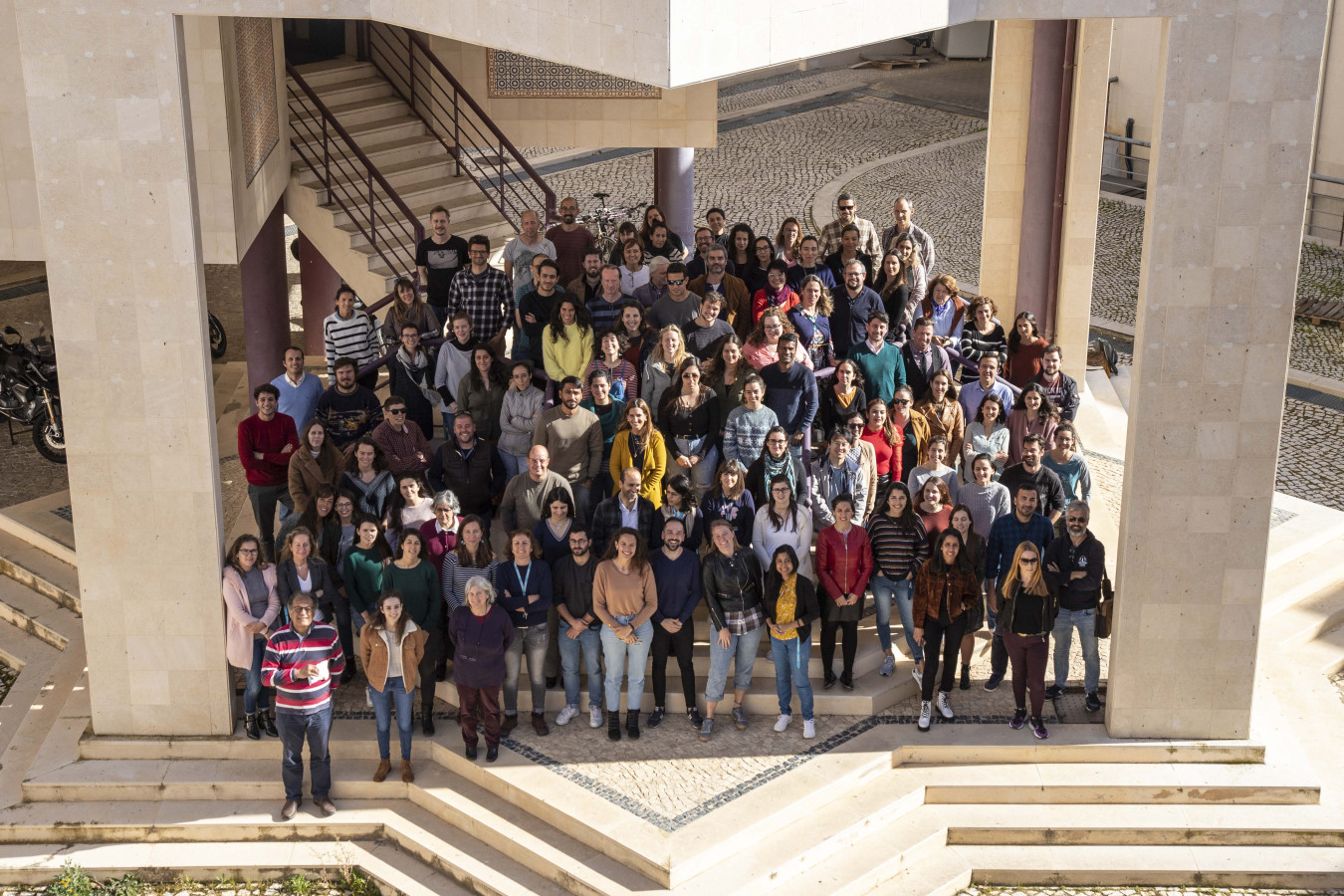
To lead this work, a Working Group was established, supported by a Steering Committee. Throughout this process, and with the contribution of the CCMAR research community, existing practices were reviewed, areas for improvement were identified, and concrete actions were defined to address the needs identified.
In September 2026, CCMAR received the HR Excellence in Research Award, granted by the European Commission in recognition of its commitment to implementing the principles of the European Charter for Researchers.
Receiving the Award does not mark the end of the process, but rather the beginning of a new phase of implementation and continuous improvement. CCMAR will continue to monitor the implementation of its Action Plan, assess progress and, whenever necessary, define new measures that contribute to an increasingly fair and inclusive research environment that supports the development of research careers.
See here an overview of the different phases of the HR Award process (EURAXESS / European Commission).
Working Group
Microscopy Facility Manager
cimonico@ualg.pt
Assistant Researcher
caviegas@ualg.pt
Scientific Diving Centre Manager
dfpaulo@ualg.pt
Junior Researcher
jmcruz@ualg.pt
Professor at Algarve University and Senior Researcher
jccardo@ualg.pt
Junior Researcher
lmmatos@ualg.pt
PhD Student
mfcmartins@ualg.pt
Molecular Biology Lab Manager
msvalente@ualg.pt
PhD Student
nhhenriques@ualg.pt
HR Manager
rnpereira@ualg.pt
PhD Student and Research Technician
tfsantos@ualg.pt
HRS4R Strategic Documents
Steering Committee
Team Leader and Member of the Board of Directors
jgoncal@ualg.pt
Lawyer and Head of Legal
tapimenta@ualg.pt
Open Science Policy
CCMAR is committed to implementing an Open Science policy, promoting the sharing of data, publications and scientific knowledge to boost innovation and increase the social impact of our research.
We promote open access to scientific publications, responsible management of research data in accordance with FAIR principles (Findable, Accessible, Interoperable, Reusable) and the dissemination of results to different audiences, including policy makers, the productive sector and society in general.
Integrity in Investigation
Scientific integrity is a central pillar of CCMAR's activity. The Research Integrity Guidelines define principles and good practices that all researchers, students and collaborators must follow, in line with national and international codes of conduct for scientific integrity.
These guidelines cover, among other things:
- honesty in the design, execution, analysis and communication of research;
- responsible management of data, biological materials and samples;
- responsibility in authorship and attribution of contributions;
- prevention of conflicts of interest;
- procedures for dealing with allegations of misconduct in research.
Code of Conduct and other policies
The CCMAR Code of Conduct establishes ethical principles and standards of behaviour applicable to the entire community, including working relationships, use of resources, environmental protection, confidentiality and prevention of conflicts of interest.
This code is complemented by other internal policies and regulations, such as:
- occupational health and safety policies;
- data protection and confidentiality policies;
- policies on the use of research infrastructure and resources;
- specific internal regulations (e.g. animal facility, scientific diving, access to facilities, etc.).
- Whistleblowing channel.
whistleblowing channel, whistle, claim, claims, whistling
Additional information and useful links
Open Science is at the heart of European research policy. Policies, initiatives and structures are being developed and implemented to open up European science and research, making it more efficient and productive, harmonious, transparent and robust, as well as more responsive to political and societal needs and expectations.
Open Science facilitates sharing and collaboration, thereby accelerating the process of discovery, improving the quality of research and making science more impactful and central to human and social development.
In 2016, the ‘FAIR Guiding Principles for Scientific Data Management and Administration’ were published in Scientific Data. The principles emphasise machine actionability (i.e., the ability of computational systems to find, access, interoperate, and reuse data with no or minimal human intervention), as humans increasingly rely on technological support to handle data as a result of the increase in the volume, complexity, and speed of data creation.
whistleblowing channel, whistle, claim
Available Soon
Available Soon
Available Soon
Plan for Gender Equality
CCMAR's Gender Equality Plan (GEP) sets out objectives, measures and indicators to promote equality between women and men in all areas of the institution's activity.
This plan complies with the European Commission's requirements for EU-funded research entities and focuses on:
- ensuring equal opportunities in recruitment, career progression and access to leadership positions;
- promoting a safe, inclusive working environment free from harassment or discrimination;
- ensuring a work-life balance;
- systematically integrating the gender perspective into research and project management.
Equality, Diversity and Inclusion Policy
In addition to the gender perspective, CCMAR is developing an Equality, Diversity and Inclusion (EDI) Policy that more broadly covers all dimensions of diversity, including, among others, nationality, age, social origin, culture, orientation and identity, health conditions and disability.
This policy aims to:
- promote respect and appreciation for the diversity of all people in the CCMAR community;
- prevent and combat any form of discrimination, harassment or intolerance;
- ensure fair and transparent internal processes, from recruitment to team management;
- create conditions for everyone to have a voice, participation and equal opportunities for development.
Working Group
PhD Student
a64568@ualg.pt
PhD Student
apdeguette@ualg.pt
Auxiliar Researcher
amarcalo@ualg.pt
PhD Student
asharif@ualg.pt
Researcher
blouro@ualg.pt
Junior Researcher
efragkopoulou@ualg.pt
Researcher
jsaraiva@ualg.pt
Principal Researcher
lcustodio@ualg.pt
mrangel@ualg.pt
Researcher
mjszynaka@ualg.pt
nmarquet@ualg.pt
phubbard@ualg.pt
HR Manager
rnpereira@ualg.pt
sponnet@ualg.pt
Principal Researcher
sengrola@ualg.pt
Researcher
sccalmeida@ualg.pt
vlaize@ualg.pt
Portuguese Diversity Charter
CCMAR has officially joined the Portuguese Diversity Charter, reinforcing its commitment to diversity, equity and inclusion.
The Charter promotes the recognition, respect and appreciation of diversity in all its forms, while fostering equal opportunities and inclusive workplaces.
By signing the Charter, CCMAR reaffirms its commitment to creating a respectful, inclusive and supportive working environment for all members of its community.