
Protecting sharks and rays

Sharks and Rays Conservation
Fierce predators or endangered species?
Sharks and rays are species of great ecological importance. Large predators of the ocean, these iconic marine creatures keep fish populations healthy, contributing to the balance of marine ecosystems.
Despite their status as ocean predators, these species are very vulnerable because they grow and reproduce slowly. Today, many species of sharks and rays are threatened or even at risk of extinction due to overfishing, habitat degradation, climate change and pollution.
Our research has been essential to better understand these species and develop effective measures for their conservation.
Elasmobranchs are cartilaginous fish, such as sharks and rays, known for their flexible skeleton and slow reproduction, making them vulnerable to overfishing.
The Professor Luiz Saldanha Marine Park
A refuge for rays and sharks
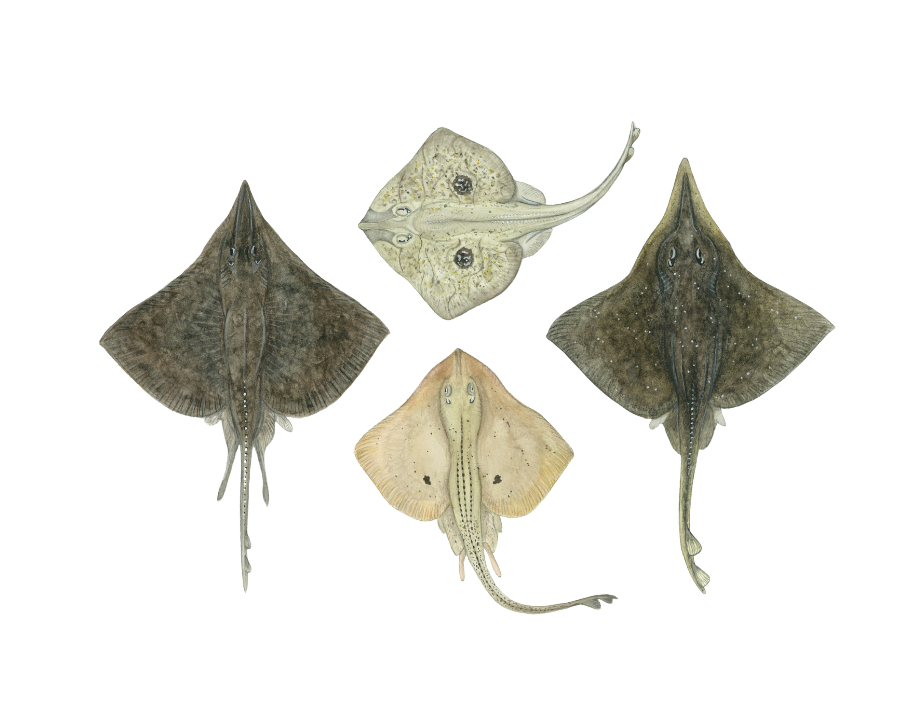
Since 2007, the Biomares Programme has been monitoring the Professor Luiz Saldanha Marine Park, part of the Arrábida Natural Park. This work has revealed that the protection measures implemented have benefited various species of rays and sharks, such as the thornback ray (Raja clavata), the undulate ray (Raja undulata) and the white skate (Rostroraja alba). These species, targets of commercial fishing, are showing signs of recovery within the park's protected areas.
CCMAR's research also highlighted the importance of marine protected areas in the conservation of highly mobile species, such as the common stingray (Dasyatis pastinaca), which finds refuge in the park during the winter and migrates to the Sado estuary in the spring. The presence of juvenile eagle rays (Myliobatis aquila) and white skates (Rostroraja alba) suggests that the area also functions as a nursery for some species.
Reducing the impact of fishing
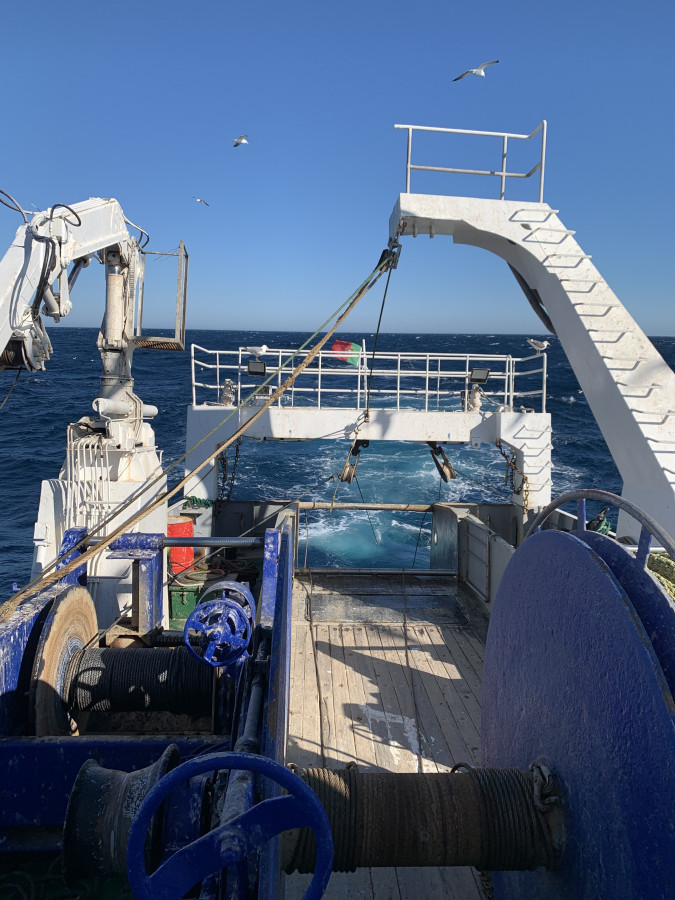
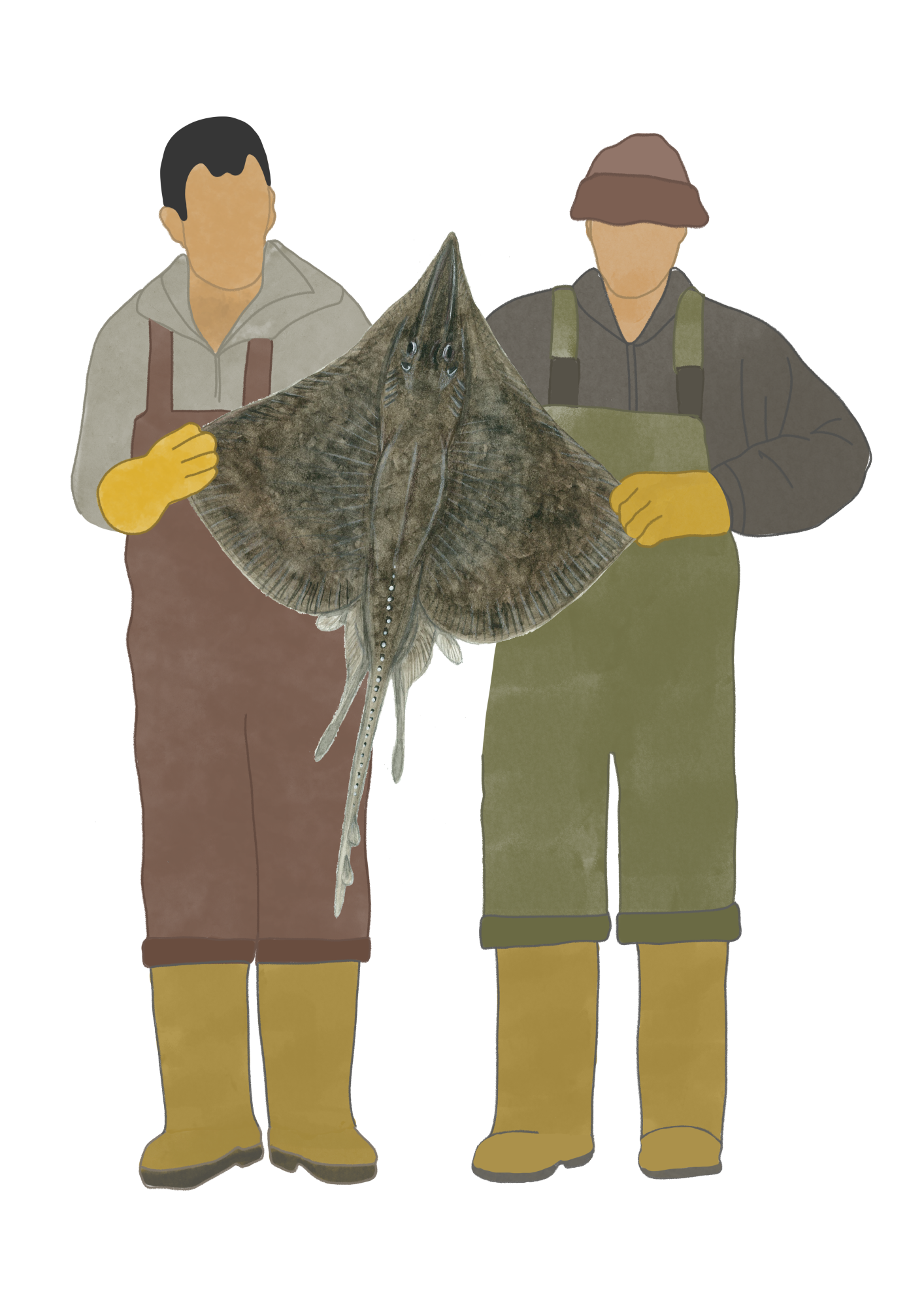
Crustacean trawling has a major impact on deep-sea sharks and rays. Although this fishing gear targets some species of shrimp, prawns and crayfish, the DELASMOP project revealed that it is a very unselective gear, resulting in large amounts of by-catch. Normally, deep-sea sharks and rays caught accidentally are thrown back into the sea, but that doesn't mean they survive: a large proportion of the individuals caught arrive dead on board. For those that don't, however, there are measures fishermen can take to increase their chances of survival.
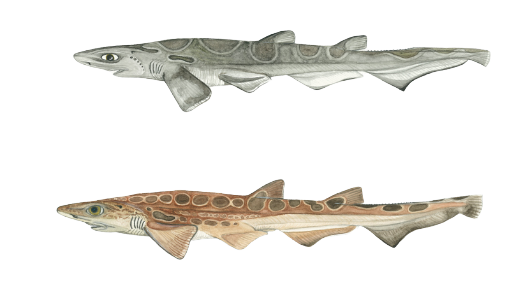
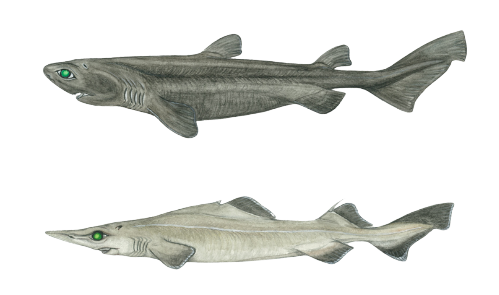
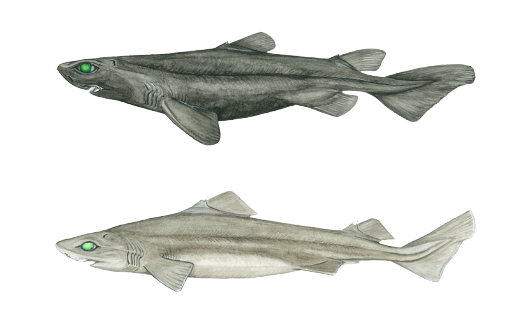
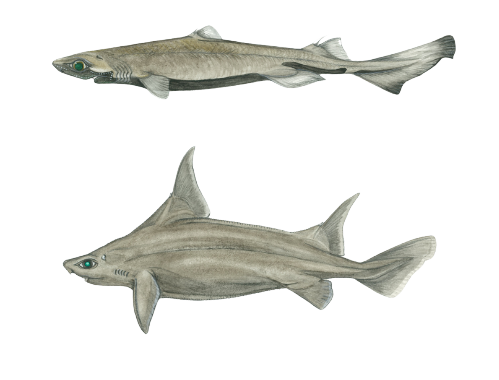
© Luís Thiem's Illustrations
What can be done to reduce catches and increase survival of sharks and rays
- Reduce exposure time: returning captured animals to the sea quickly can significantly improve their survival rates.
- Prioritise the return of animals: if the animal arrives on board alive and in good body condition (strong body and blowhole movements and no significant injuries), its return should be prioritised.
- Proper handling during return: Avoid holding the animals by the tail or gill slits and minimise the time they are caught on board. Good practices to avoid harming the animals can be found in the ‘Shark and ray handling guide’.
- Use exclusion devices on nets: These modifications allow elasmobranchs to escape before being pulled on board.
- Restrict fishing to certain depths: although by law crustacean trawling is limited to a depth of 800 metres, it is advisable not to exceed 500 metres, especially in the areas between the cities of Portimão and Sagres and in the Portimão canyon.
- Electronic monitoring: The use of cameras on boats can improve the identification of bycatch and contribute to more efficient management.
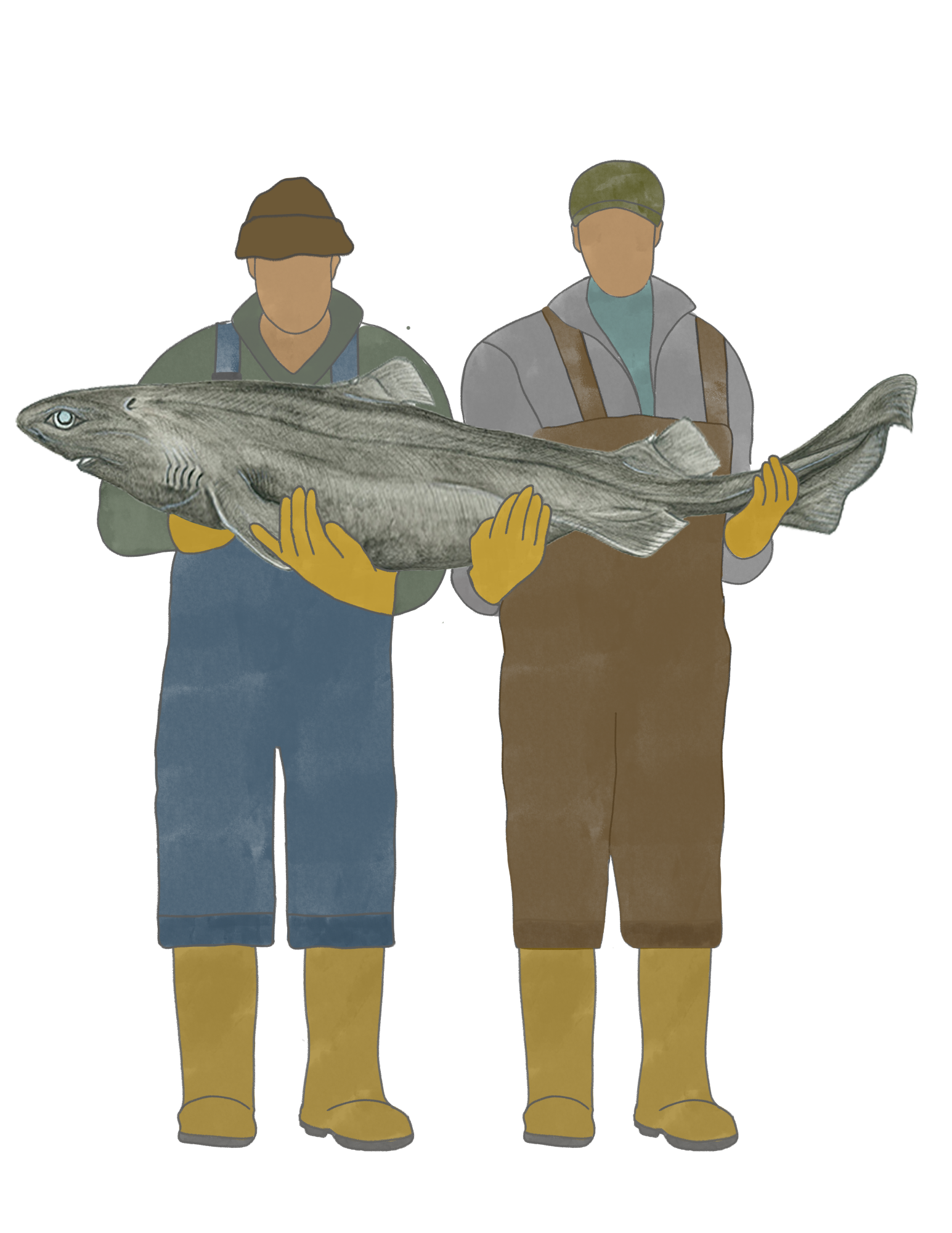
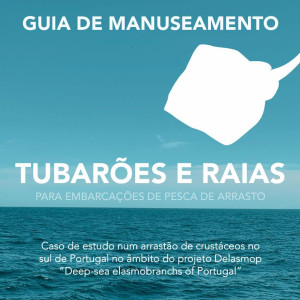
Descarregue aqui o guia realizado pelo projeto DELASMOP.
Deep-sea elasmobranchs are frequent bycatch in crustacean trawling. The weight of elasmobranch bycatch on the south coast varied between 0 and 47% of the total net weight, while on the south-west coast, the values varied between 1 and 58%.
Climate Change and the Future of Elasmobranchs
Our studies also suggest that, despite environmental challenges, fish species caught in Portuguese fisheries, including some elasmobranchs, may be able to withstand the climate change predicted for the coming decades. However, continuous monitoring is essential to assess the impact of climate change and ensure the sustainability of shark and ray populations in Portugal. Elasmobranch research and conservation remain a priority for CCMAR, contributing to the preservation of marine biodiversity and a healthier ocean for future generations.