Course Content
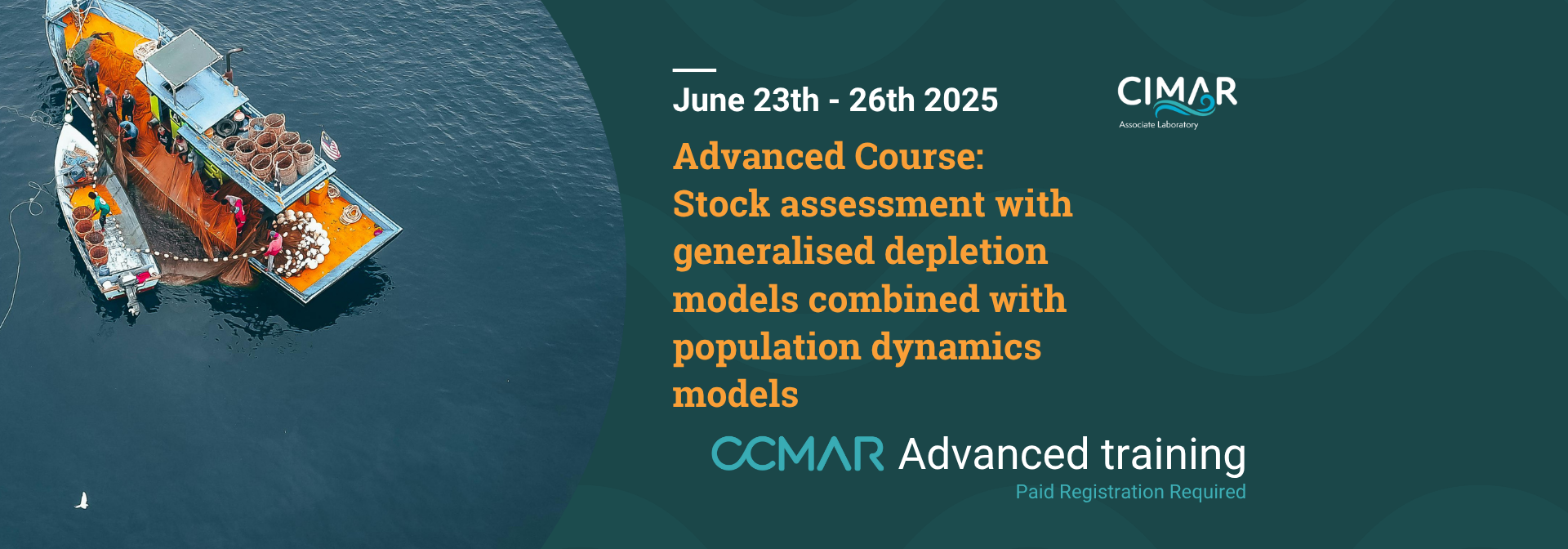
Bringing the successful practice of fisheries management to small-scale, coastal fisheries; In this seminar I will discuss the state of fisheries management and stocks worldwide and the prospect of achieving sustainable fisheries exploitation in the vast realm of small-scale, coastal fisheries. I will present examples of applications of a modelling framework that I demonstrated in a paper published in 2015, including cases of sea urchin, cephalopods, eels, and bony fish, from Chile, Mauritania, Madagascar, Taiwan, Spain, Portugal and Saudi Arabia, with particular emphasis on coastal fisheries connected to artificial reefs in the Algarve. I will conclude with the potential connection of these models to ecosystem-based management of fisheries.
Course Description
This course is oriented to marine biologists, fishery managers, statisticians and modellers of the dynamics of marine populations. It shows how to use the R package CatDyn to achieve statistically solid estimations of stock abundance, natural mortality, fishing mortality, exploitation rate, maximum sustainable yield, among other quantities, using elementary fisheries monitoring data. The modelling framework is useful to data-poor and data-limited fisheries, small-scale and coastal fisheries. It is versatile, accommodating different life histories, multi-fleet cases, seasonality, and other common specificities of diverse fisheries.
Pre-Requisites
Personal computer: basic knowledge on r-environment is required; A basic understanding of fishery science; OS Windows 7 or higher, 64 bits; r-studio.
Course Organization
Course Pricing:
📌 Students: 180€
📌 Researchers/Academics: 200€
📌 Others: 250€
NOTE: Members of CIMAR-LA (CCMAR and CIIMAR) have the same access conditions.
If you wish to pay through CCMAR internal funds (option only available to CCMAR members), you should not make the monetary payment. In this case, you should contact the researcher responsible for these funds, requesting authorisation by email, with Cc: to expedienteccmar@ualg.pt, requesting your registration to be paid by internal transfer, indicating the name of the event, the cost centre to support and the amount. Only cost centres classified as “receitas próprias” and, possibly, the Plurianual internal allocation (requires prior authorisation from the researcher responsible for the event) are available for this payment method.
Instructor's description
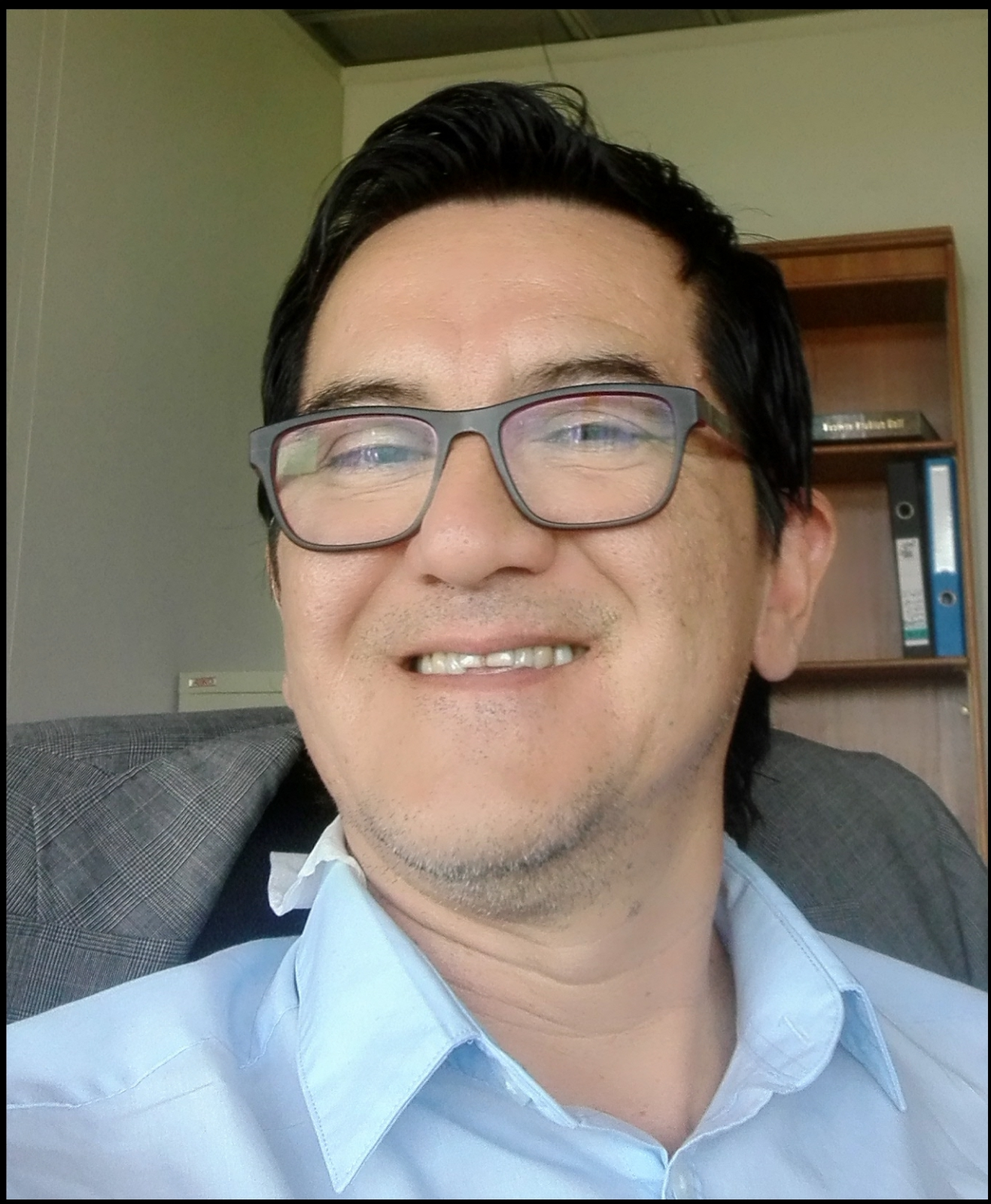
Rubén Hernán Roa-Ureta, born in February 2, 1963, in Santiago de Chile. I hold a Ph. D. in Statistics from the University of Otago, New Zealand, M. Sc. In Oceanography and B. Sc. Marine Biology from Universidad de Concepcion, Chile. Over 28 years I have worked as an academic, government scientist, and research scientist in Chile, New Zealand, the Falkland Islands, Spain and Saudi Arabia, generally conducting mathematical and statistical modelling for fishery resource management and to understand ecological processes in the marine realm. I am currently doing contract scientific work for a Saudi Arabia university, the Chilean government, Mauritania’s government, a U.K. charity, and Spanish regional administrations. I am collaborating in fisheries science in the Algarve and Iceland. In 2012 I created a class of fishery stock assessment models that delivers advanced results for management with elementary fisheries monitoring data. Since then my main efforts have been directed to implement specific versions to different cases, which presently include sea urchin, cephalopods, bivalves, eel, and coastal, pelagic and demersal fisheries in South America, Europe, the Middle Esta, Africa and Asia. My main drive in this area is to demonstrate that the kind of tools that have permitted successful fisheries management of large-scale fisheries can also be implemented for small-scale, coastal fisheries, which account for nearly half of the world catch, most of the employment and economic value. I have published six papers since 2012 in this line of research with co-authors from Chile, Asia, the Middle-East and Europe.
List of articles
Leitão F, Monteiro JN, Cabral, P. Teodósio M.A, Roa-Ureta R.H. 2023. Revealing the role of crab as bait in octopus fishery: an ecological and fishing approach for support management decisions. Marine Policy. 2023, 105878. https://doi.org/10.1016/j.marpol.2023.105878
Monteiro J, Roa-Ureta RH.; Ovelheiro A, Teodósio MA, Leitão F*. 2024. Sustainable Harvesting Alone Cannot Prevent Decline of the Green Crab Fishery in Portugal. Fisheries Managment and Ecology. https://doi.org/10.1111/fme.12777
Roa-Ureta, R.H, Santos, M.N., Leitao, F. 2019. Modelling long-term fisheries data to resolve the attraction versus production dilemma of artificial reefs. Ecological Modelling 407, 108727.
Lin, Y-J, Tzeng, W-N, Han, Y-S, Roa-Ureta, R.H. 2017. A stock assessment model for transit stock fisheries with explicit immigration and emigration dynamics: application to upstream waves of glass eels. Fisheries Research 195, 134-140.
Roa-Ureta, R., Molinet, C., Bahamonde, N. 2015. Hierarchical statistical framework to combine generalized depletion models and biomass dynamic models in the stock assessment of the Chilean sea urchin (Loxechinus albus) fishery. Fisheries Research 171:59-67.
Roa-Ureta, R. 2015. Stock assessment of the Spanish mackerel (Scomberomorus commerson) in Saudi waters of the Arabian Gulf with extensions of generalized depletion models under severe data-limited conditions. Fisheries Research 171:68-77.
Roa-Ureta, R. 2012. Modeling in-season pulses of recruitment and hyperstability-hyperdepletion in the Loligo gahi fishery of the Falkland Islands with generalized depletion models. ICES Journal of Marine Science 69:1403-1415.


Registration is now closed.
Related events