Published on
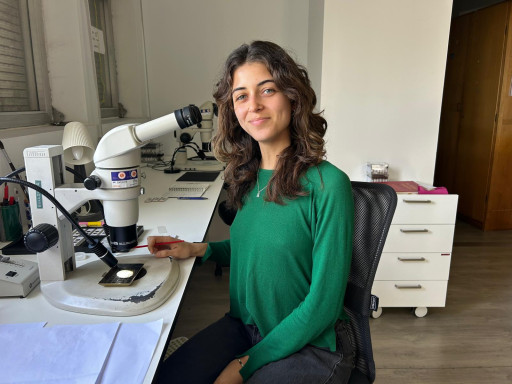
Mélinda Martins has joined CCMAR to study microplastic pollution in marine environments at the Structural and Chemical Analysis Platform. Previously, Mélinda worked at IPMA and collaborated with CCMAR on projects related to climate changes in the North Atlantic. Outside work, she is passionate about outdoor activities such as basketball, sailing, snorkelling, and motorbike trips along the Portuguese coast.
Tell us a bit about the work you will be doing at CCMAR.
At CCMAR, I am currently studying microplastics in beach sand and water samples using LC-HRMS (Liquid Chromatography-High Resolution Mass Spectrometry). My research focuses on detecting specific plastic markers resulting from thermal oxidation and developing methods to correlate these markers with plastic particle concentrations. The aim is to enhance our understanding of microplastic pollution in marine environments, with particular emphasis on how photochemistry and other environmental processes affect microplastic behaviour. This work will contribute to more effective monitoring and understanding of the environmental impact of plastic pollution on coastal and marine ecosystems.
What do you enjoy doing outside of work?
Outside work, I love staying active and being outdoors. Basketball has been a passion of mine since childhood. I also hold a boating licence, so I enjoy spending time on the water and sailing. Snorkelling is another activity I really enjoy, as it allows me to see marine life up close. Additionally, I like going on motorbike trips along the beautiful Portuguese coastline, combining adventure with stunning sea views. These activities help me relax and stay connected to nature.
What were you doing before joining us?
Before joining CCMAR, I worked as a researcher at IPMA in Lisbon and collaborated with CCMAR’s Ocean & Climate Group. I was part of the Hydroshifts project, which focused on understanding abrupt climate changes in the North Atlantic during glacial periods (MIS 12 and MIS 16). My research involved reconstructing past sea surface temperatures and studying ocean circulation through the analysis of marine sediment cores from the Blake Outer Ridge. The goal was to understand how changes in the subtropical Atlantic, particularly the Gulf Stream, influenced global climate patterns and to improve our ability to predict future changes in ocean circulation and climate.