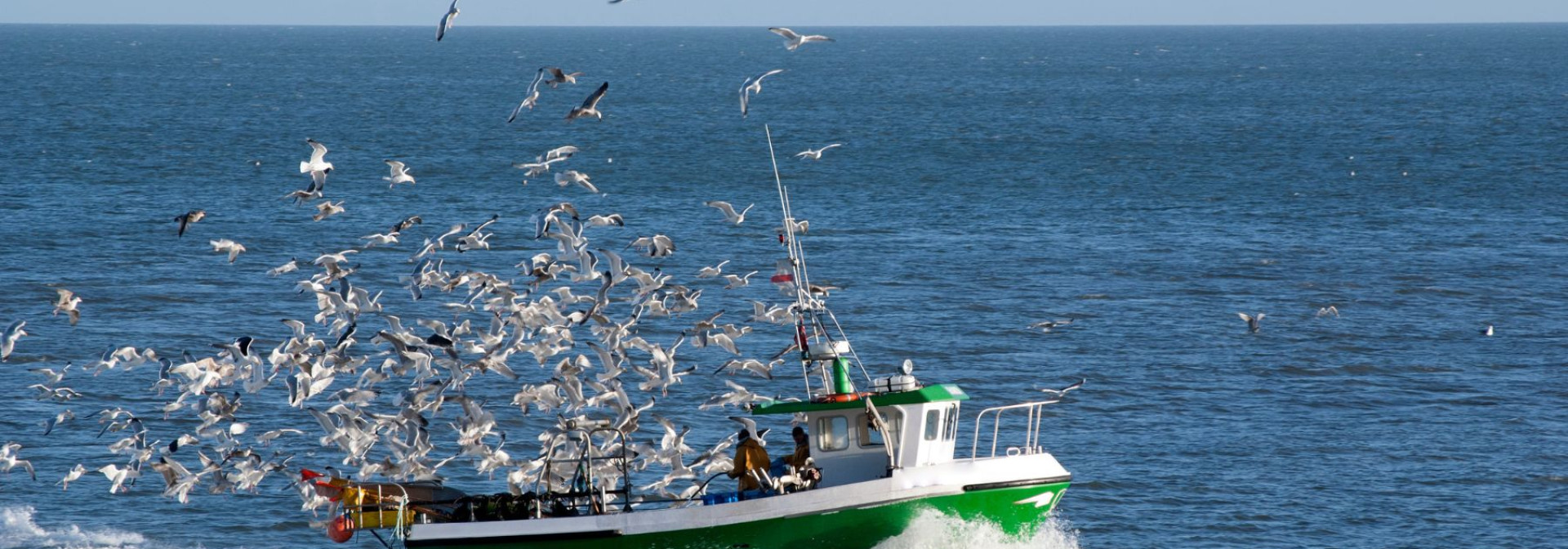
Understanding what happens at sea has always been one of the greatest challenges in fisheries science. Vessels operate in vast areas far from shore and often use fishing gear that is difficult to monitor. Passive gear, such as nets, traps and longlines, accounts for the majority of fishing operations globally. Unlike active gear such as trawling, the movement of vessels using passive gear may be difficult to interpret from location data. This limitation directly impacts fisheries assessment, maritime spatial planning, and the effectiveness of monitoring efforts.
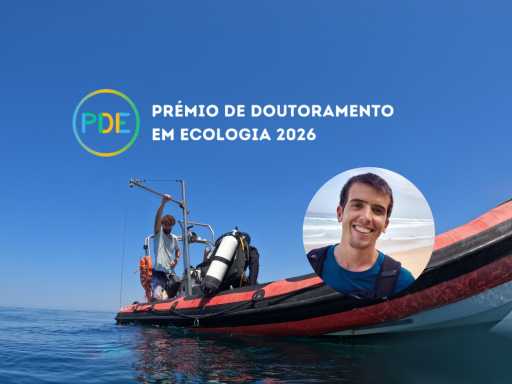
It was in this context that Nuno Sales Henriques, a CCMAR researcher for over a decade, developed new methodologies as part of his PhD that enable scientists, managers and decision-makers to gain an unparalleled understanding of the activity of multi-purpose passive gear fisheries. The scientific quality of his work earned Nuno a final assessment of high distinction (Summa Cum Laude).
“Firstly, we developed a method of classifying vessel tracking data which enables us to identify all behaviours that occur during a fishing trip, including periods of fishing and periods of non-fishing activity.”
After classifying over 85 million data points, Nuno and his team extracted key information about the fleet. They identified the full sequence of behaviours, from navigation and gear deployment to the immersion period, retrieval, and return to port.
Having classified more than 20,000 fishing trips, the next steps were to map and quantify fishing effort, develop a risk assessment methodology to detect vessels and times of year most likely to have undeclared landings, and assess the quality of fishing logs reported by the vessels themselves.
The results have highly relevant, practical applications
- By accurately revealing where and when fishing activities take place, it becomes possible to plan offshore infrastructure, such as wind farms and aquaculture units, while avoiding areas of critical importance to the fishing industry.
- This information can also be used by the authorities to identify periods and vessels at higher risk of unreported landings, thereby increasing efficiency and reducing the costs of monitoring, control and surveillance operations.
- High-resolution estimates of fishing effort also make an essential contribution to stock assessments, supporting management decisions that ensure the sustainable exploitation of resources.
Although it was developed based on Portuguese reality, the work has international application potential and could support improvements in fisheries and ocean management in various regional contexts.
Throughout his PhD, Nuno worked closely with the Fisheries, Biodiversity and Conservation (FBC) team at CCMAR, emphasising that daily discussions, brainstorming sessions and knowledge sharing were crucial to the success of the research. He also highlights the constant support he received from his supervisors, Jorge M. S. Gonçalves and Karim Erzini (both from CCMAR) and Tommaso Russo (from the University of Rome Tor Vergata), one of the world's leading experts in vessel tracking data. “The support, mentoring and scientific environment at CCMAR made all the difference,” he says.
‘These years have been some of the most meaningful and rewarding of my life, both professionally and personally.’ Now that he has completed his thesis, Nuno intends to continue his research with the aim of becoming a leading figure in fisheries data analysis. He also hopes to develop even more robust methodologies to strengthen the knowledge and governance of marine activities.


Reference:
- Sales Henriques N, Russo T, Bentes L, Monteiro P, Parisi A, Magno R, Oliveira F, Erzini K, Gonçalves JMS, (2023) An approach to map and quantify the fishing effort of polyvalent passive gear fishing fleets using geospatial data.
- Sales Henriques N, Erzini K, Gonçalves JMS, Russo T, (2024) Let’s measure it: an approach of high-resolution estimates of bottom fixed net fishing effort at national level
- - Sales Henriques N, Russo T, Erzini K, Gonçalves JMS, (2025) Improving Monitoring, Control and Surveillance efforts through Vessel Tracking and Fishery Dependent data
- Sales Henriques N, Russo T, Erzini K, Gonçalves JMS, (2025) On the accuracy of self-reported data for fishing effort estimates – A case study from a polyvalent