
Researchers from CCMAR took part in a large global study in which tea bags were used as a device to measure organic matter decomposition rates. The research revealed how rising temperatures can reduce the capacity of wetlands to store carbon, an essential service for mitigating climate change.
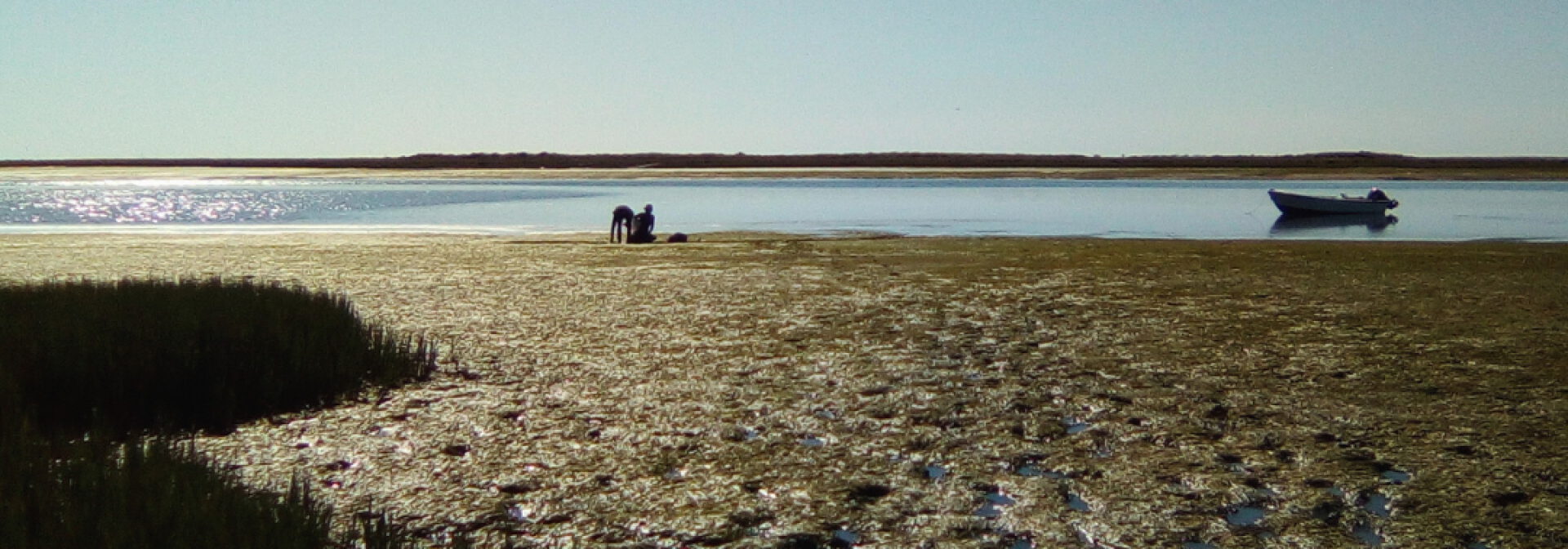
An international team of scientists buried 19,000 bags of green tea and rooibos in 180 wetlands in 28 countries to measure the capacity of wetlands to retain carbon in the soil, what is known as wetland carbon sequestration. Although tea bags may seem like an unusual instrument for measuring this phenomenon, they are a proven method for measuring the release of carbon from the soil into the atmosphere.
This is the first time that tea bags have been used in a long-term, large-scale study. Dr Stacey Trevathan-Tackett, lead author of the study and researcher at RMIT University, highlighted the importance of this research:

“This is the first long-term study of its kind, using the tea bag methodology, which will help us maximise carbon storage in wetlands and reduce global emissions. Changes in carbon pools can have a significant impact on global warming - less carbon decomposed means more carbon stored and less carbon in the atmosphere.”
A New Approach to Studying Carbon Storage
Tea bags are a simple, standardised way of identifying the influence of climate, habitat type and soil type on carbon decomposition rates in wetlands. The project used the two types of tea bags (green and rooibos) as measures for the different types of organic matter found in soils. Green tea consists of organic matter that decomposes easily, while rooibos decomposes more slowly.
In 180 wetlands in 28 countries, the scientists buried between 40 and 80 tea bags about 15 cm deep and collected them at various intervals over three years, marking their location with GPS. They then measured the remaining organic mass to assess the amount of carbon preserved in the wetlands.
A Ria Formosa como Local de Estudo
In the Algarve, Carmen B. de los Santos, CCMAR researcher, and Rui Santos, CCMAR researcher and Professor at University of the Algarve,applied the tea bag methodology to the Ria Formosa, a coastal lagoon recognised for its high biodiversity and ecological importance.
The researchers buried 120 teabags in three types of habitat in the Ria: intertidal seagrass, low marsh and Caulerpa prolifera grassland. For two years, they continuously recorded the temperature of the soil with temperature sensors that they buried in the sediment. Carmen B. de los Santos emphasises the importance of this local work:
“The Ria Formosa offers an excellent natural laboratory for understanding how temperature and ecosystem characteristics influence carbon storage. Our work here contributes valuable data to the global effort to understand carbon storage in wetlands.”
Main results and conclusions
The team studied the effect of temperature in two ways: using data from local meteorological stations for each site and comparing the differences between climatic regions. In general, warmer temperatures led to an increase in the decomposition of organic matter, which translates into a reduction in the preservation of carbon in the soil. The two types of tea acted differently as the temperature rose.
Trevathan-Tackett explains that ‘for the harder-to-degrade rooibos tea, it didn't matter where it was - the higher temperature always led to more decomposition, which indicates that the type of carbon we would normally expect to see last longer in the soil was vulnerable to higher temperatures. As temperatures rose, the green tea bags decomposed at different rates depending on the type of wetland - it was faster in freshwater wetlands, but slower in mangrove and seagrass wetlands.’
The study's findings are helping to piece together the puzzle of wetland carbon sequestration on a global scale. Freshwater wetlands and salt marshes, such as those found in the Ria Formosa, showed the greatest remaining tea mass, indicating a greater potential for carbon storage in these ecosystems.
Prof Rui Santos stressed the importance of these conclusions:
“Wetlands like the Ria Formosa are natural carbon sinks. Understanding their dynamics in the face of climate change is essential for conservation and management strategies.”
Next Steps
The researchers intend to integrate data from wetlands, including the Ria Formosa, with studies of terrestrial ecosystems to improve global carbon storage models. These results will support policymakers in identifying and protecting priority areas for carbon storage.
Study Reference:
Climate effects on belowground tea litter decomposition depend on ecosystem and organic matter types in global wetlands. Published in Environmental Science and Technology (DOI: 10.1021/acs.est.4c02116).
