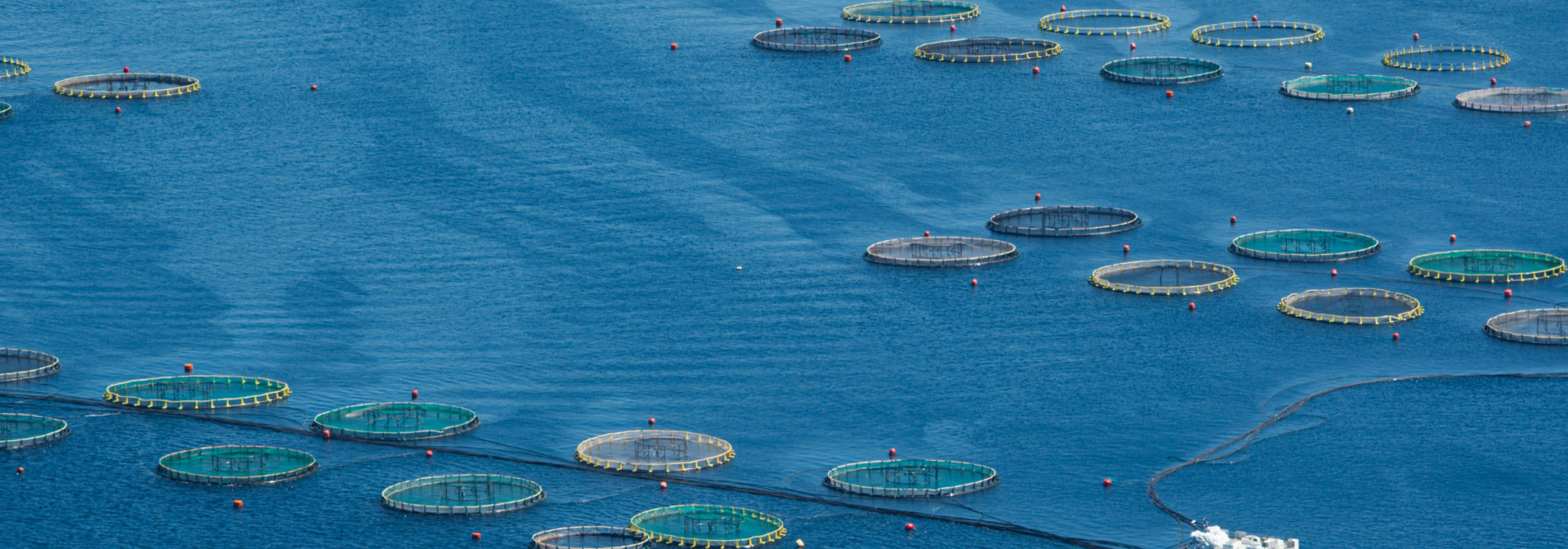
A new international study led by Centre of Marine Sciences (CCMAR) reveals that global marine aquaculture — the fastest-growing source of seafood worldwide — could remain largely resilient to climate change if countries meet the Paris Agreement’s target of limiting global warming to 1.5°C.
The study, published in npj Ocean Sustainability, assessed the climate exposure of 327 marine aquaculture species across all Exclusive Economic Zones (EEZs) under three future climate scenarios. Results show a striking contrast between sustainable and high-emission pathways. Under the Paris-aligned scenario (SSP1-1.9), more than 40% of the world’s marine regions would remain entirely unexposed to harmful climate change, including many of today’s most productive aquaculture areas. In contrast, under higher-emission futures, almost every aquaculture region globally becomes exposed to novel and potentially disruptive climatic conditions.
“Our results show very clearly that the Paris Agreement is not just about protecting nature — it is about protecting the foundations of global food security”.
“If we are able to meet the Paris Agreement targets, much of the world’s marine aquaculture can continue to operate under familiar, stable environmental conditions. If we do not, environmental change becomes nearly universal, forcing costly adaptation, relocation, or loss of production across most regions.”
Marine aquaculture currently provides nearly one-third of all seafood consumed globally and is projected to become the dominant source of seafood by 2030. According to the study, under Paris-aligned warming, major producing regions in Asia, Europe, and South America could largely maintain the climatic stability required for farmed species. However, under high-emission scenarios, semi-enclosed seas such as the Baltic, Black, and Red Seas, as well as equatorial regions, emerge as some of the most severely impacted areas worldwide.
The findings reinforce the role of CCMAR at the forefront of international marine sustainability research and highlight how climate policy decisions made today will shape not only marine ecosystems, but also the future availability and affordability of seafood for billions of people worldwide.
Although it was developed based on Portuguese reality, the work has international application potential and could support improvements in fisheries and ocean management in various regional contexts.
Reference:
- Mackintosh, A. L., Hill, G. G., Costello, M. J., & Assis, J. (2025). No significant projected climate change effects on the geographic ranges of marine aquaculture species under the sustainable scenario (SSP1-1.9, 1.5°C warming). npj Ocean Sustainability.