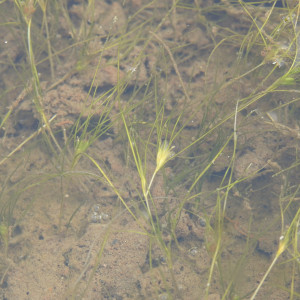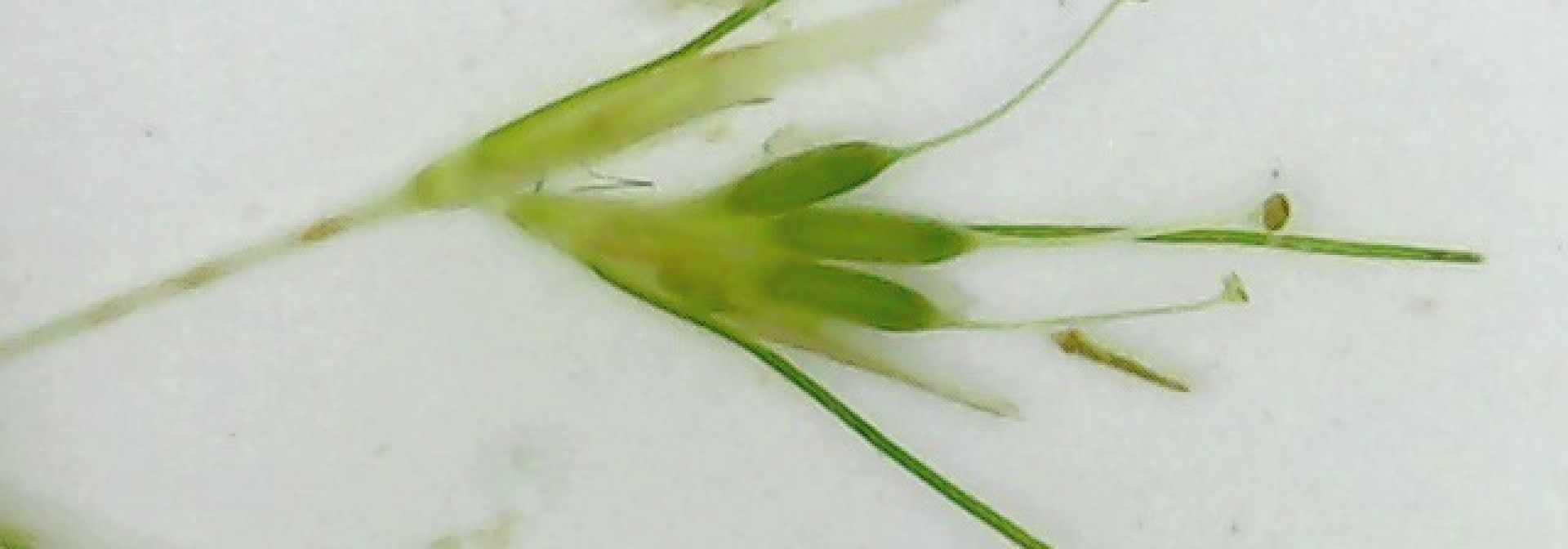
Althenia filiformis has not been seen in Portugal since 1853. They are very small aquatic plants, annuals and typical of salty and very shallow habitats that dry out in summer, such as salt marshes. It's not a particularly charismatic plant and perhaps that's why it's gone unnoticed all this time. For now we know of clusters in the Mondego estuary and in various parts of the Ria Formosa, but there will probably be others to discover in the rest of the country.
Believed to have been extinct in Portugal since 1855, it was recently rediscovered in an area near Évora. This find was the result of the work of a team of researchers made up of Duarte G. Frade, João Neiva, Anne Davison, Gareth A. Pearson and Ester A. Serrão.
The study, published in the journal Aquatic Botany, combined field observations to confirm the identity of this species. The discovery underlines the importance of continuing to explore less studied areas and reinforces the need for conservation measures to protect rare or neglected species in Portugal.
As well as confirming the plant's identity as a subspecies that was believed to be extinct, the researchers highlighted the ecological conditions that allowed it to survive. The rediscovery opens the door to developing conservation strategies that can replicate these conditions and protect other species at risk.
The work also highlights the crucial role of collaborative science and institutions such as CCMAR in preventing the species from becoming extinct.
References:
Rediscovery of Althenia (Potamogetonaceae) in Portugal, 168 years after the last collection