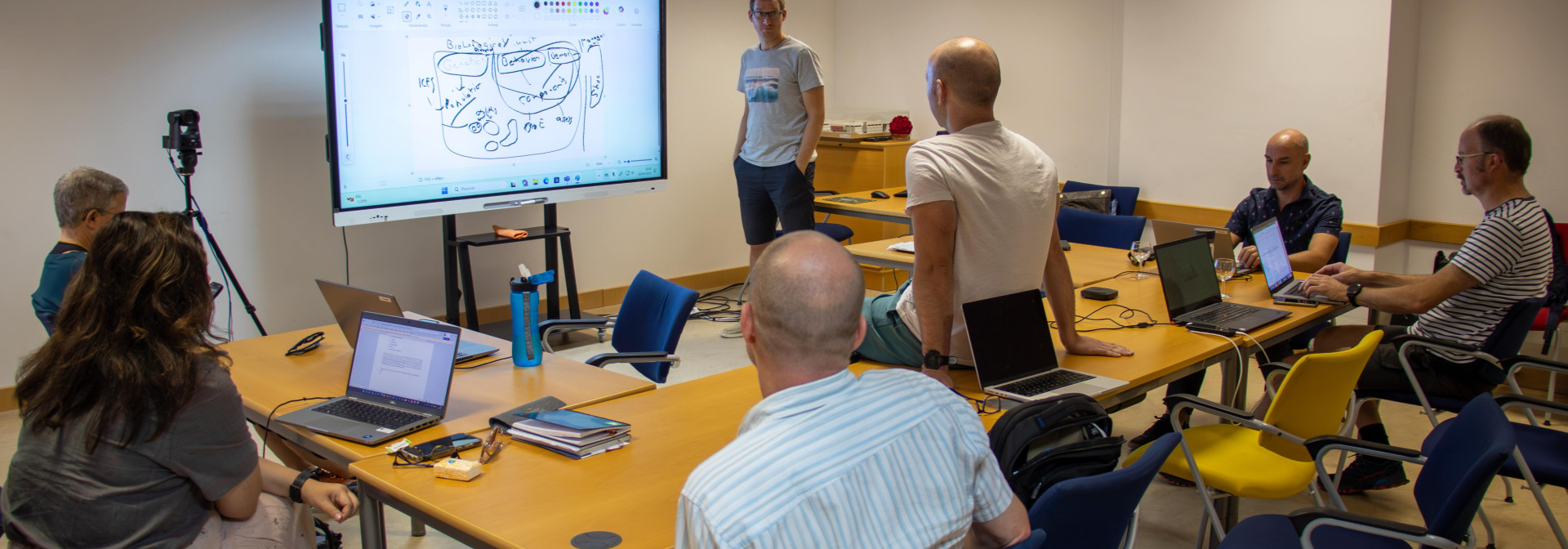
The Stock Identification Methods Working Group (SIMWG) met in Faro, Portugal, from 9–11 September, at the University of the Algarve, Gambelas Campus. SIMWG is part of the International Council for the Exploration of the Sea (ICES) and plays a pivotal role in improving fisheries management through better understanding of stock structure.
This expert group reviews and develops new methodologies to define and investigate the spatial boundaries of exploited fish stocks, providing guidance to other ICES expert groups on how to interpret patterns of population structure. Identifying true biological stock units is essential before any assessment or modelling can be performed, making SIMWG’s work central to evidence-based resource management.
Traditionally, fish stocks have been managed according to geographical features or ICES subdivisions. However, research continues to show that biological populations often do not conform to these administrative boundaries. SIMWG seeks to bridge this gap by recommending science-driven approaches that minimize mismatches between true population dynamics and management areas.
The group brings together specialists in ecology, genetics, morphometrics, parasitology, and statistics, reflecting the interdisciplinary nature of stock identification. The biodiversity of exploited fish species demands a combination of methods to accurately capture their spatial structure, and the field continues to evolve rapidly.
Portugal was represented by just two members in this meeting, one of whom is CCMAR’s researcher Rita Castilho, who contributed her expertise in population genetics and connectivity. Dr. Castilho highlighted the importance of this work:
"Through our participation in SIMWG, Portuguese researchers contribute directly to the wider European and international dialogue on refining fisheries management. This is about making sure our management decisions match the biological reality of the species we depend onParticipating"
SIMWG’s work continues to support the development of robust, science-based approaches to fisheries management, helping ensure sustainable exploitation of marine resources in Europe and beyond.