Published on
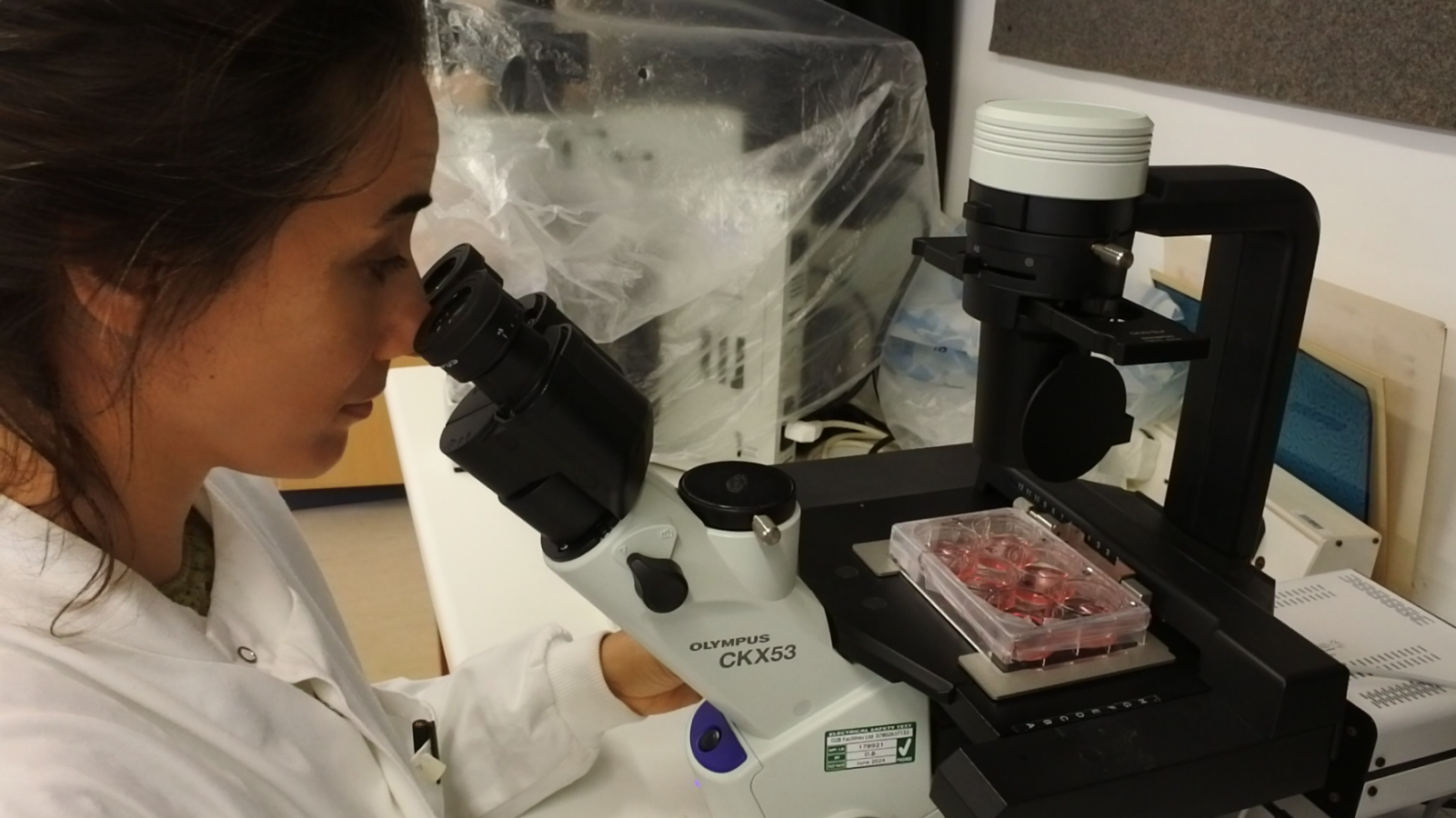
As part of the AQUAEXCEL3.0 project, our researcher Carina Mónico visited the Institute of Aquaculture at the University of Stirling in Scotland. Her visit focused on gaining valuable insights into fish cell culture techniques and learning best practices for managing a cell culture facility in a biosafety environment. The knowledge acquired will be instrumental in advancing CCMAR’s new Cell Culture Facility, facilitating improved research capabilities and promoting sustainable innovations in aquaculture and environmental science.
Why did you visit Scotland?
I visited the Institute of Aquaculture in Stirling University to learn fish cell culture techniques, and to gain insights into managing and organising a cell culture facility in a biosafety confinement environment.
What was the highlight of your visit?
Without a doubt, learning from the incredible Fiona Muir, who has over 30 years of experience running a cell culture facility! Her expertise showed me how important senior technicians are to science and education. Plus, Scotland’s breathtaking beauty, diverse landscapes, and rich history made the trip even more special!
How does this visit open up new opportunities for you or other CCMAR researchers?
This visit has already made an impact! I’m applying what I learned in my role as CCMAR's Microscopy Facility Manager to better advise and assist researchers on cell imaging experiments. We’re also in the final stages of establishing a new Cell Culture Facility at CCMAR, and the insights from Stirling will help us apply best practices, improve safety protocols, and organise the infrastructure to get it up and running smoothly.
What kind of impact can the knowledge transfer from your trip have on society?
Cell culture facilities have a broad impact on environmental sustainability, healthcare, and scientific innovation. For example, in aquaculture, these techniques improve fish health and help reduce overfishing by promoting sustainable food production. Cultured cells are also used in research labs to develop alternative protein sources, reducing reliance on traditional animal farming. In healthcare, cell cultures are crucial to test new drugs, studying diseases like cancer, and assessing the toxicity of chemicals and cosmetics, reducing the need for live animal testing. This paves the way for more targeted therapies, safer products, and better public health outcomes.