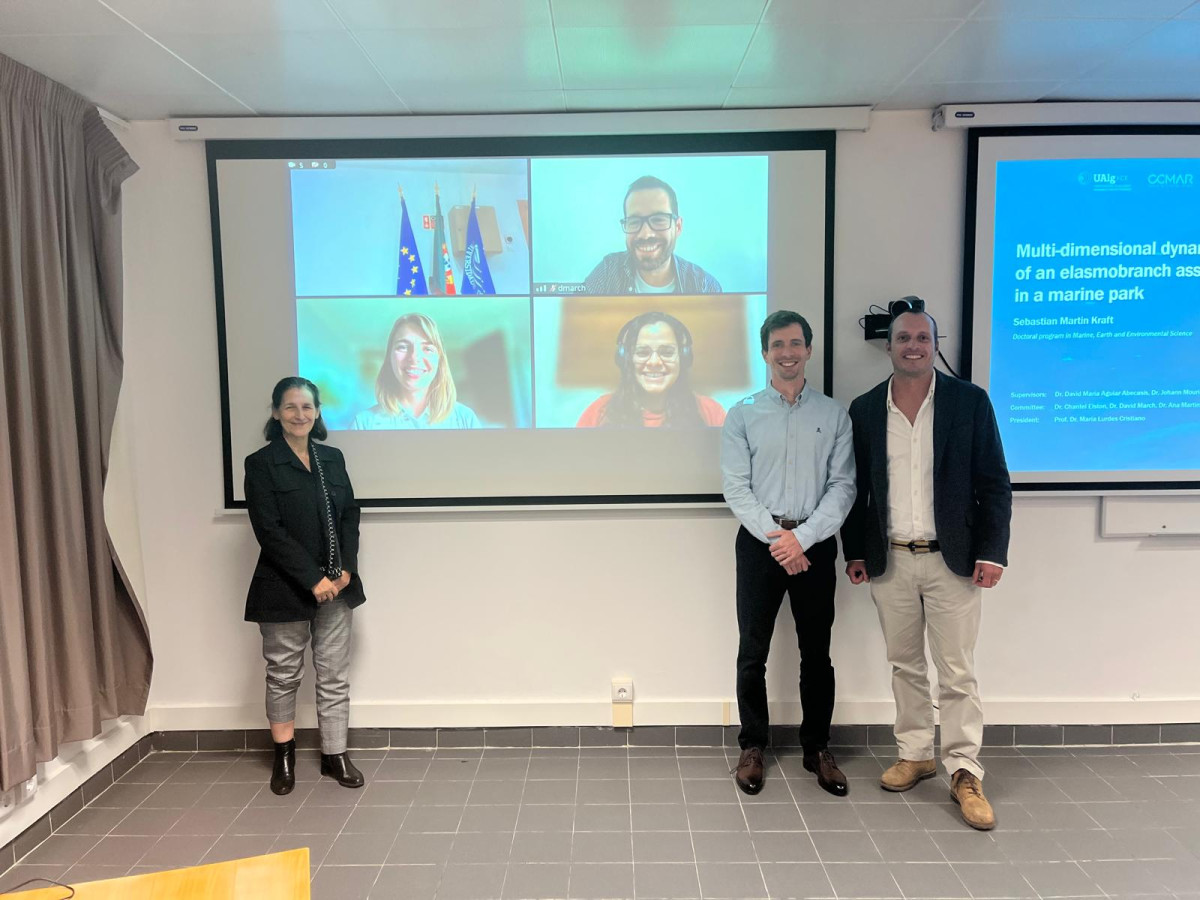
With a fascination for elasmobranchs, the group that includes sharks, skates, and rays, Sebastian Kraft recently completed a PhD that offers new perspectives on the conservation of these animals in the Luiz Saldanha Marine Park.
On 8 November, Sebastian presented his doctoral thesis, entitled "Multidimensional dynamics of a group of elasmobranchs in a marine park." The study focused on the movement patterns of three species: the thornback ray (Raja clavata), the common stingray (Dasyatis pastinaca), and the critically endangered white skate (Rostroraja alba). Using passive acoustic telemetry, Sebastian investigated how these species use the park over time and assessed the effectiveness of this marine protected area (MPA) in conserving them.
Sebastian explained that “many of these species have slow life cycles, which make them less able to withstand the effects of overfishing, currently the biggest threat they face.”
In his work, Sebastian recorded daily and seasonal movements, revealing significant patterns of space use, such as:
- The common stingray finds refuge in the park during winter but migrates to the Sado estuary in spring.
- Juvenile white skates use the park as a nursery, but adults are absent, indicating they rely on other areas.
- Female thornback rays are less frequent, suggesting unequal protection within the park.

“These results showed that the marine park is important for different demographic and life stages of each species,” Sebastian explained.
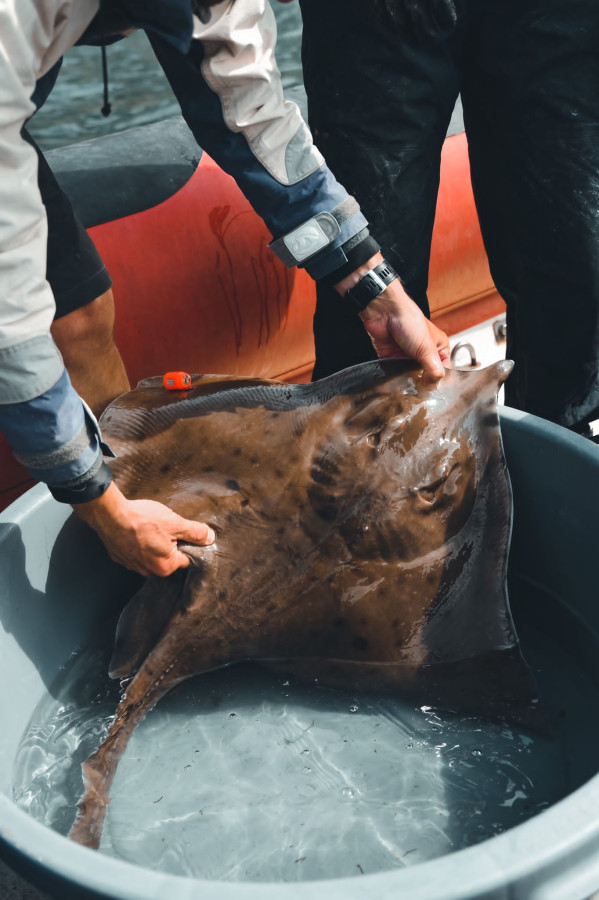

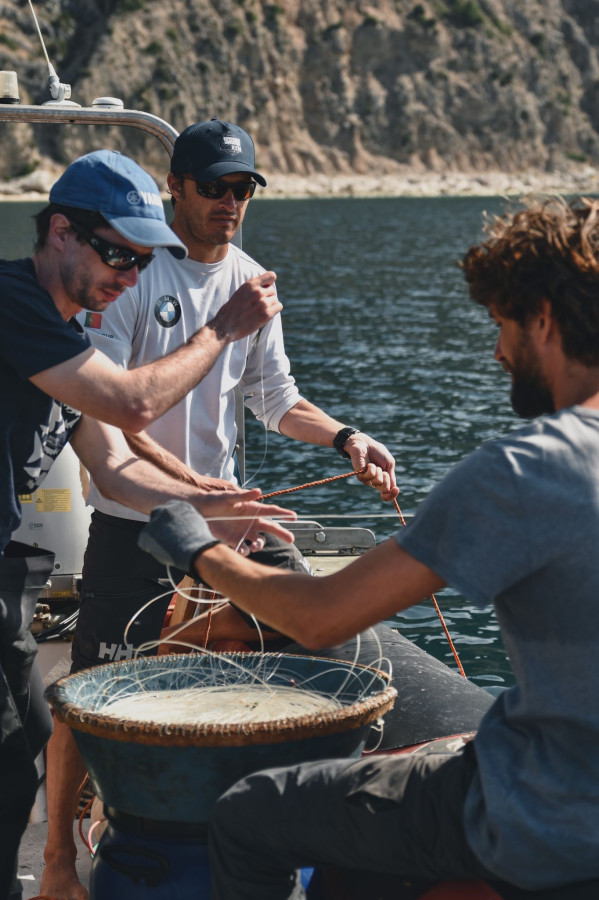
Now, with concrete data, it is possible to adjust the regulations of the Luiz Saldanha Marine Park to better protect these species, considering their critical periods of vulnerability and exploring how adjacent areas can complement the protection provided by the park.
Sebastian expressed his gratitude to his supervisors, Dr. David Abecasis and Dr Johann Mourier, and to the colleagues who supported him both in the field and with data analysis.
Congratulations to Sebastian Kraft on his remarkable contribution to marine science and on earning his PhD!
You can read here the full article.