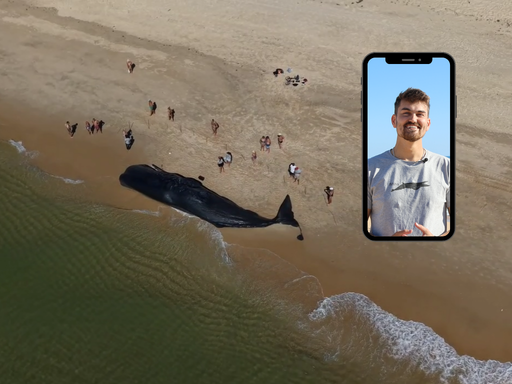
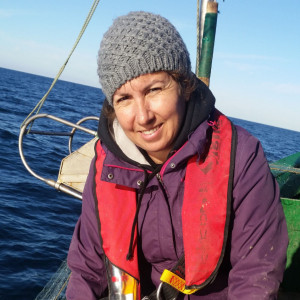
We interviewed Ana Marçalo, a PhD researcher in Fisheries at CCMAR. Watch the video showing the work carried out under the LIFE Ilhas Barreira project. Ana highlights the relevance of seabird conservation in the context of Portuguese fisheries, especially in the Algarve region, and emphasises how the application of specific techniques and the cooperation of fishermen are fundamental to mitigating one of the biggest threats facing this group - accidental fishing.
What sparked your interest in protecting seabird populations in the fisheries sector?
My interest was sparked by the realisation that fishing activities have a significant impact on seabird populations.
During my studies and fieldwork, I observed that many seabirds suffer accidental mortality when they feed on bait, fish waste or discards (fish caught and not kept on board for various reasons) and become entangled in fishing hooks or nets. This direct contact with nature and the opportunity to contribute to the conservation of endangered species motivated me to find solutions that would benefit both the birds and the fishing community.
What is the main threat that seabirds such as the Balearic shearwater and Audouin's gull face during fishing?
"The main threat is incidental capture (bycatch), where birds are attracted to bait and caught fish and become entangled in hooks or nets, resulting in injury or death.
This threat is critical for the Balearic shearwater and Audouin's gull, whose populations are at risk. Portugal has an additional responsibility to monitor and conserve these species, as the largest population of Audouin's Gull in Europe nests on the island of Deserta, in the Ria Formosa, and the Portuguese coast is the most important wintering area in the world for the Balearic Shearwater, Europe's most endangered seabird."
What do fishermen have to gain by implementing measures to remove and, in turn, protect these seabirds?
"By adopting responsible fishing practices, fishermen:
- improve the sustainability of their fishing operations by preserving marine ecosystems,
- gain access to markets that value their responsible practices (potentially obtaining better prices),
- reduce damage to equipment caused by birds of prey
- and improve their reputation in society and among regulatory authorities, contributing to the conservation of endangered species."
What is the most effective way to protect seabirds during fishing and why?
"The most effective way to protect seabirds during fishing is to reduce the direct interaction between birds and fishing gear, thereby minimising incidental catches.
Various techniques can be used, including the use of bait, deterrents, good practices such as not throwing fish waste into the water during fishing manoeuvres (hauling and dropping the net) to avoid attracting birds during these periods of greatest risk, and adjusting schedules to avoid peaks in bird activity and techniques to reduce the attraction of birds to boats."
What tasks and challenges will the CCMAR team now tackle in the context of this issue?
"Our CCMAR team will focus on monitoring bird-fisheries interactions to provide up-to-date data, developing awareness campaigns* for fishermen and the public on the importance of seabird conservation, and building partnerships with governments, NGOs and other bodies to secure funding and ongoing support for these projects."
*Based on the results and work carried out as part of the Life Barrier Islands project.