Vânia Baptista, a researcher at the Marine Science Centre of Algarve (CCMAR) and a visiting assistant professor at the University of the Algarve, has been awarded the 2025 Mário Ruivo Prize by the Intergovernmental Oceanographic Commission of UNESCO (UNESCO-IOC), in partnership with the EurOcean Foundation and the Portuguese government. The award ceremony took place on 30 June in Paris during the UNESCO-IOC Assembly.
The award recognises the LittleFish-STP project, which studies Sicydium bustamantei, a little-known endemic species of fish from São Tomé and Príncipe that is essential for the subsistence of riverside and coastal communities. As well as generating scientific knowledge about the species' life cycle, ecology, conservation status and socio-economic value, the project involved fishermen, students and local institutions directly, promoting a participatory science model adapted to local marine conservation challenges.
The award forms part of the Mário Ruivo Memorial Lecture Series, which was established to recognise the achievements of early-career professionals in ocean science whose projects are aligned with the United Nations' Sustainable Development Goals, particularly SDG 14: Life Below Water. Vânia Baptista was chosen from a pool of candidates from around the world, which highlights the contribution of the new generation of Portuguese researchers to international ocean science.
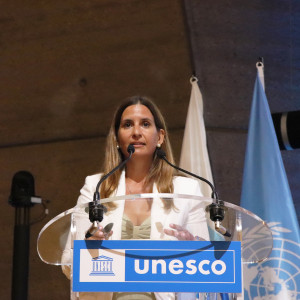
'This award is not just for me, but for the whole LittleFish-STP team. This project has helped me to grow as a scientist, a leader and a person. Together, we have demonstrated that it is possible to connect people to the ocean in inclusive and sustainable ways, while promoting the value of small-scale fisheries, ocean literacy, and biodiversity conservation. Our focus has been on small, neglected species such as the little fish.”
In 2017, the team witnessed dozens of small fish being sold as adults at the local market in São Tomé. Subsequently, the research team, led by CCMAR researchers, confirmed that these were juveniles of a hitherto unknown endemic species. In 2022, the LittleFish-STP project began its activities, taking a participatory approach in collaboration with local partners. Since then, in addition to studying the species, the project has engaged the local community in many of its activities. As well as strengthening scientific collaboration between Portugal and São Tomé and Príncipe through knowledge sharing, the project has involved the community in monitoring fish and in school activities, as well as in courses and workshops. This integration of different generations has fostered a collective sense of belonging and responsibility towards the sea.
“The LittleFish-STP project shows that we need to reconnect with the ocean. This means listening to those who depend on it, respecting its ecological complexity and investigating socially just solutions based on scientific data,” says Vânia Baptista.
The legacy of the LittleFish-STP project will continue in a new chapter with the Finding Home project, which will build on the existing line of research.