Established in 2018, the Parque Natural do Sudoeste Alentejano e Costa Vicentina (PNSACV) is one of the country's most biodiverse and extensive marine territories, home to around 1,900 identified species, including dozens classified as 'threatened' and several endemic species. Despite its ecological importance, little integrated information was previously available to predict the effects of ocean warming on its habitats, species and associated human activities.
In order to address this issue, researchers at CCMAR conducted a series of scientific studies that combined climate vulnerability assessments, field monitoring and adaptation planning. This created an unparalleled foundation for the marine park to be managed in a more informed and resilient way.
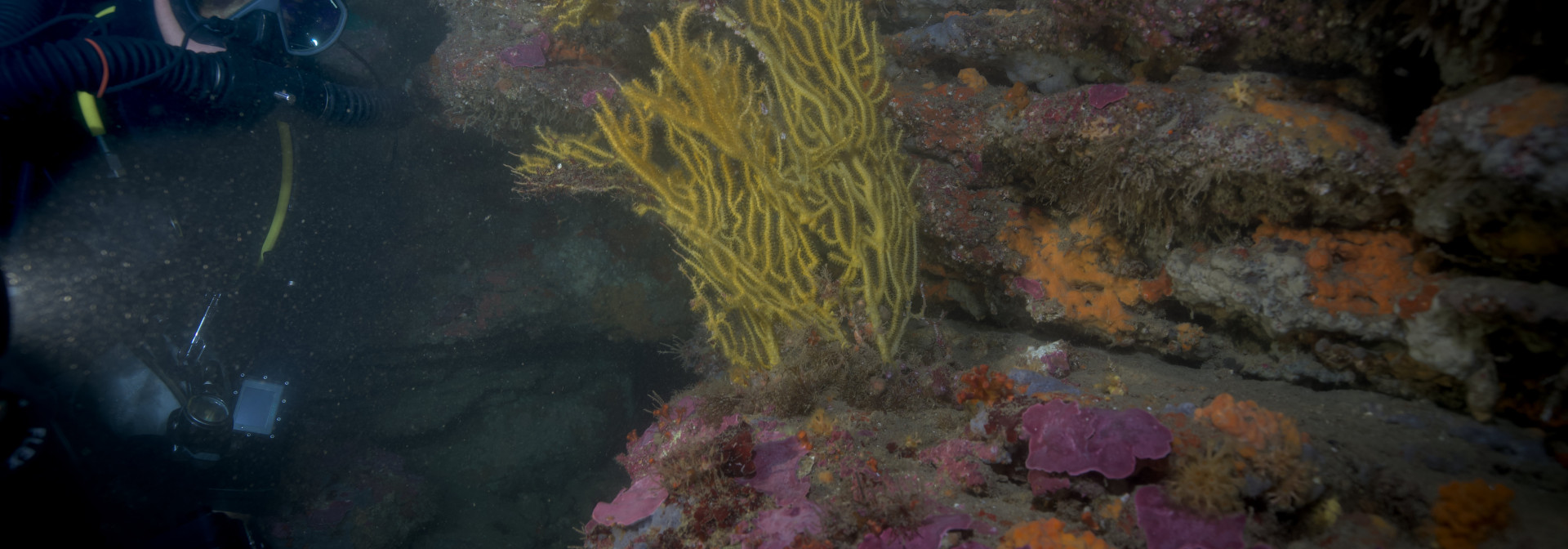
One of the key aspects of this work was the completion of a climate vulnerability assessment. This integrated ecological and socioeconomic dimensions in order to analyse how the various components of the PNSACV might respond to climate change by the end of the century. Using future climate scenarios commonly employed by the scientific community (RCP 4.5 and RCP 8.5) as a basis for the analysis, increasing risks associated with ocean warming and marine heatwaves were identified, particularly for sensitive habitats such as coral reefs and reef-forming gorgonians, as well as for human activities that depend on these ecosystems.
At the same time, between 2024 and 2025, CCMAR initiated underwater monitoring protocols in the field. This work included:
- assessing the health of gorgonians and mass mortality events,
- monitoring indicators of fish sensitive to warming,
- and installing temperature loggers to characterize local thermal variability.
Together, these actions function as an early warning system for climate impact.
From knowledge to planning
Based on the results of the vulnerability assessment and field monitoring, CCMAR coordinated the development of a preliminary climate change adaptation plan for the park. This plan translates scientific evidence into specific action proposals organised into categories such as capacity building, raising awareness, protection and restoration, research and monitoring, economic instruments, governance and technological solutions.
To ensure these proposals reflected local realities, an online survey was conducted with stakeholders including managers, researchers, fishermen, tour operators, local authorities and civil society organisations. The responses enabled adaptation measures that were more widely supported and perceived as more relevant for the future of the marine park to be prioritised.
Taken together, these studies form the basis of the first integrated reference framework for climate-informed park management. While the results are still preliminary and require greater stakeholder involvement, they provide a robust scientific basis for future revisions to management plans, enhanced monitoring and more participatory adaptation processes.
This work was developed as part of the MPA4Change project, which is funded by the Interreg Euro-MED programme. It illustrates the importance of the link between science, continuous monitoring and the involvement of local stakeholders in preparing marine protected areas for the challenges posed by a rapidly changing ocean.