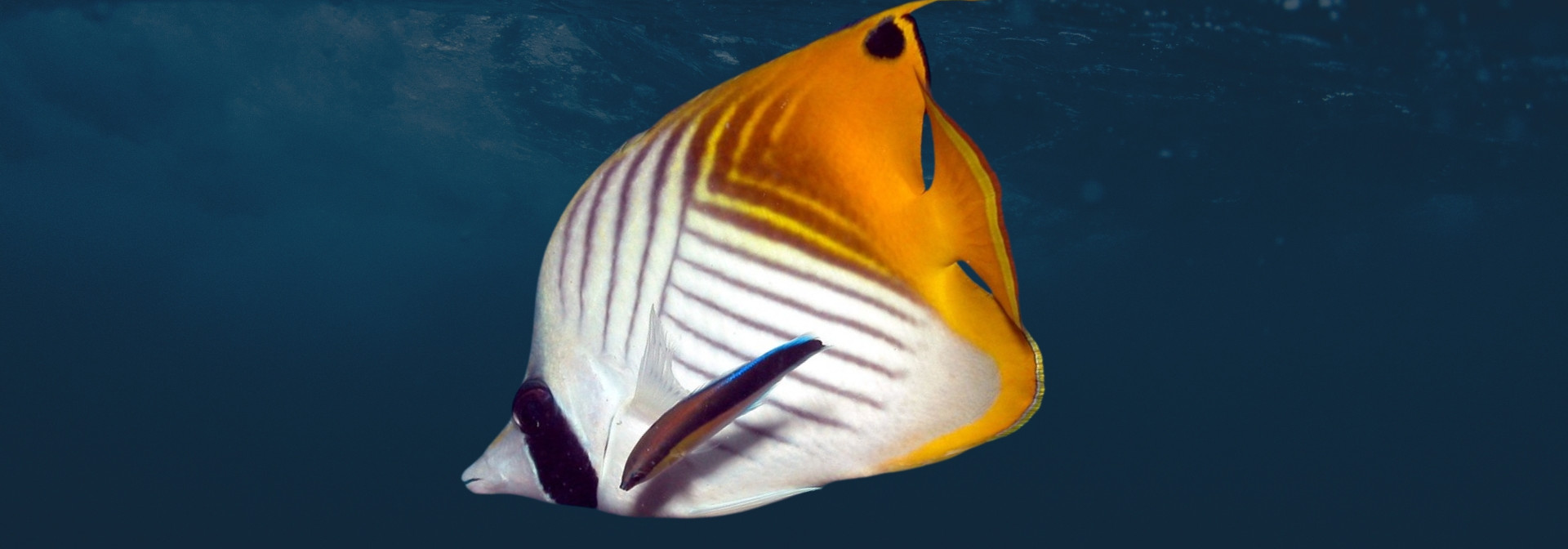
A recent study published in the Proceedings of the Royal Society B journal proves that mutualistic interactions between cleaner fish and their clients activate the opioid system in the latter, promoting a pleasurable experience similar to the reward processing experienced by humans and other mammals.
Cleaner fish, such as the Labroides dimidiatus, provide a vital service by removing ectoparasites and dead tissue from client fish, such as the butterflyfish Chaetodon auriga. While the benefits of parasite removal are well understood, this study investigated whether these interactions also provide pleasure through the tactile stimulation that cleaner fish offer their clients.
In humans and other mammals, the sensation of pleasure is regulated by the brain's opioid system — a network of neurons, receptors and chemicals that modulate pain, pleasure, mood and other physiological functions. While these chemicals can be produced naturally, drugs such as morphine and heroin act on this system to generate intense feelings of pleasure.
For the first time, the research concluded that the same system is involved in the sensation generated by the simple touch of a cleaner fish. This reveals crucial information about the complex nature of reward processing in clients' brains. Surprisingly, it was found that 'liking' and 'wanting' are regulated by different systems in the brain. 'Liking' depends on opioid substances, but 'wanting' does not. Furthermore, the profound importance of touch, tactile sensation and interspecies social rewards in fish was highlighted, demonstrating that the benefits extend far beyond mere functionality.
The study was carried out by researchers from Portugal (CCMAR and CIBIO) and Brazil (the University of South and Southeast Pará and the University of Rio Grande do Norte), and was led by Caio Maximino, Heloysa Araujo-Silva, Inês Cacela-Rodrigues, Ana Carolina Luchiari and Marta Soares. The experimental component was carried out at CCMAR by João Saraiva, a researcher from the FishEthoGroup at CCMAR.

‘Our study clearly shows that fish experience pleasure from tactile stimulation, which is regulated by their opioid system,’ says João Saraiva, shedding new light on emotional experiences in fish and the fundamental mechanisms of reward processing in vertebrates.
‘This deepens our understanding of the emotional states of fish and draws parallels with how physical touch generates feelings of pleasure in humans and how that pleasure is mediated by endogenous opioids,’ he explains.
To reach these conclusions, researchers conducted several behavioural and pharmacological tests to determine whether client fish experience pleasure and reduced stress levels when receiving a kind of ‘massage’ from cleaner fish — in addition to parasite removal, since the clients did not have any parasites — and whether this pleasure was linked to the opioid system.
‘Personally, one of the most interesting conclusions of this study is that just seeing the cleaners is enough to motivate the clients to seek cleaning and massage services, but this motivation is regulated by something beyond the opioid system. In other words, wanting and liking are different things,’ concludes João Saraiva.
The conclusions were surprising, opening up new avenues for exploring the neurobiological foundations of social behaviour and well-being in aquatic species. The study emphasises the need for further research into the role of neurotransmitters such as dopamine in social rewards in fish.